The Wrath of Kon

Dispatches, thoughts, and miscellanea from writer Jon Konrath

Tag: apple

On the death of a New Balance customer

So Steve Jobs died, right on the heels of everyone taking a shit on the iPhone announcement and the new model not being able to read minds, turn straw into gold, or last sixteen weeks on a one-hour battery recharge.  Cause of death is assumed to be his pancreatic cancer, but this is a guy who was in the middle of a fierce legal battle with a company that uses PowerPoint for design documents, bug databases, legal briefings, and product mockups, so it’s possible he bought it from extreme eyestrain.  At any rate, the internet is swimming with heartfelt tributes from weepy Apple fans who are all remembering how Jobs invented the Apple II, Mac, and iPod, which is news to Steve Wozniak, Jon Rubenstein, and Jef Raskin, respectively.

I got started on the Apple II way back in grade school, although when it came time to actually own a machine, I got a Commodore 64.  That was a no-brainer; a C-64 cost $200, and a similarly-equipped Apple was about two grand.  And when it came time in college to gear up, a Mac Plus cost about $2500, while a cobbled-together PC cost a few hundred bucks.  By that time, Jobs moved on to bigger things, like the NeXT computer, and I took many a walk across campus to screw around on those high-end magnesium black cubes.

Even though I made a living helping people deal with their dying Macs over the phone (“shut down all of the other apps; reboot; zap the PRAM”) I never actually owned one. I did, however, identify as a Mac User.  Between a few long-term loans of old classic Macs and the hours spent in the Mac labs on campus, I did quite a bit of work on the machines.  I laid out my first zines in Pagemaker, and used the GUI-fied version of WordPerfect back when the 5.1 PC version was just a blue and white DOS box on a screen.  I probably identified with the Mac as some form of rebellion, of being different than all of the other masses of business school droids sitting in front of Windoze machines, plunking away at Lotus 1-2-3 spreadsheets.  And back in the early 90s, if you wanted to edit images or record sound or cut movies or do page layout, you used a Mac.  PC people could whip out the virtual dick measured in kilobytes and megahertz and brag about how much more they got for their dollar, but at the end of the day, they were sitting at a C: prompt, typing in all caps.

I eventually bought my own Mac, and have since bought a bunch of different iPods and iPads and iPhones and other iStuff that has made life easier and more fun.  And Steve Jobs was somewhat responsible for that, or at least responsible for the company from not completely going into the shitter in the late 90s.  But it always irks me a bit when people say he “invented” the stuff.  I’ve always been more of a fan of the Other Steve and his hacking of hardware that eventually led to the Apple II, or the futurist (and former tech writer) Jef Raskin, whose ideas about different computing paradigms eventually transformed into the Macintosh.  I’ve always liked the design of the Mac, but that’s also not entirely his deal, either (Jerry Manock).

Jobs falls squarely into the schizophrenic relationship Americans have with CEOs.  They don’t deserve their high salaries, but when a company fails, it’s entirely their fault.  They don’t invent things, but they do.  I am not saying either of these is right or wrong, but it amazes me when people believe both of these things.  And in the case of Steve Jobs, it always infuriates me when people think a CEO should single-handedly be involved with every aspect of a company.

This management belief is the one thing that pissed me off the most about Jobs.  Not that he did this incorrectly, but that he led so many managers to believe that if you acted like an egotistical asshole and got your thumbs in every aspect of a product’s lifecycle, you would be treated like a goddamn genius and get fantastic results.  I’ve worked for several managers like this, the kind of people who are in charge of a billion-dollar company, but need to copy-edit every single page of a stupid user manual that nobody will read, and then waste all of your time insisting they know more about technical writing than you do.  Just because Steve Jobs did the same shit, doesn’t mean anybody that did that would get the same results.  It’s like suddenly becoming a Nazi sympathizer will somehow help you become a leading auto manufacturer.

Probably the thing that freaks me out the most about the death of Steve Jobs is that he was only 56, and I’m now pushing 41, and I’m not exactly making billions of dollars on any of my companies.  I’ve always hoped that by the time I got some form of cancer, the medical community would be able to inject cell-repairing nanobots into my veins and the whole thing would go away in less time than it would take for me to jet-pack over to the local Mars shuttle and catch some lunch on the red planet.  Of course, now 58% of the country believes that science should be banned from schools, and I realize I am fucked.  I should probably eat some more vegetables or something.

Anyway, Command-Option-P-R, Mr. Jobs.  Thanks for not making me spend a fifth of my life trying to figure out what the fuck copy of d011v109.sys I need to download every other time I need to read a CD-ROM.
I'd hate to be a piece of furniture in Steve Ballmer's office this week

The Mac App Store launched Thursday, and Herman Miller stock went up two points in anticipation of all of the chairs Steve Ballmer has probably been throwing at people this week.  There’s no way the sweaty-pitted Microsoft CEO isn’t beating his middle managers like red-headed step-children after the news came out that people downloaded a million apps in the first day, with 10,000 apps available at launch.  The Mac App Store changes things in ways that people in Windowsland cannot even contemplate, although when Win7SP2 launches with the MSFT half-ass attempt of the same concept, I’m sure we’ll hear all about the greatness, just like we’ll hear about how great judicial advocacy is from Teapotters that have railed against it for the last two years when they need it to keep Guantanamo bay open.

The Mac App Store changes things in a big way, both good and bad.  Back when I got started in this industry, if you wanted to write and sell an application for a Mac (or a PC), you rode your dinosaur to work, hired a bunch of people to put your crap on floppy disks and into boxes, and then either sold it yourself in your local computer stores (kids younger than 20: imagine a Best Buy with only a computer section, that didn’t suck), or you got your retail boxes dumped into the channel and flushed out to big stores and catalogs.  (Catalog: a paper version of Amazon, but it took 4-6 weeks to get your stuff.)  Then the internet happened, and people sold software on web sites, where you somehow sent money and either got a download or got a CD-ROM sent to you through the pony express for later installation at your own leisure.

But if you had this great software package, you had this huge list of problems.  Gotta set up a web site.  Gotta get a shopping cart system in place.  Gotta take credit cards and get a merchant account and whatever SSL nonsense your ISP wants you to get.  Or, gotta bend over and spread for PalPal’s cut of the vig.  Gotta find a way to have a download center that isn’t just at widget.com/dontlookhere/dl/product.zip so the first person that buys your crap doesn’t just spam the magic link to the world and let everyone download.  Gotta come up with come crazy system of software enablement, serial numbers you type in and send securely, whatever obfuscated nonsense you need to keep the world from just emailing your ZIP file to all of their friends.  Gotta find a way to drive traffic to the site.  Gotta find a way to get people to return to the site for upgrades and new versions.  There are a lot of moving parts, a lot of things to consider, and either every software reseller reinvents the wheel, or you join some tribe or cabal or commune or collective or whatever else to use one common set of machinery for everyone’s releases, and you pay for the privilege.

So now you avoid all of that.  Pay Apple a hundred bucks to join, upload your DMG file, and you’re in a searchable, centralized catalog of apps.  When a new Apple user fires up their iMac for the first time, there’s a pretty little icon to click that brings them to a huge store filled with games and productivity apps and stuff people can click on without scrambling for their credit cards or signing up for yet another e-merchant account that will probably eventually get hacked, with your password and Visa number and home phone ending up in a torrent sent out to every script kiddie in the world.

There’s also the issue of central maintenance.  When you have to push out a patch, you don’t spam out emails, and you don’t have to write complicated code to beam back to the mothership and check if the latest version is installed on the user’s PC. You tell Apple you have a new version, and let them do the dirty work.  And when a person bricks their MacBook or spills juice in their iMac and has to go get a new machine, they just plug in their username and all of their apps magically download again.  There isn’t a two-month process of trying to remember all of the crap you installed, or a weekend-long backup and reload on an external drive or a pile of DVD-Rs.

Yeah, there are downsides.  You’re paying Apple that hundred bucks, and they’re also skimming 30% of the take on your sales.  But do you know how much banks take from mom and pop companies on merchant accounts?  I’d tell you, but there are like 79 different surcharges and monthly fees and address verification fees and machine rental fees and every other nickel-and-diming the banks can think of to hit you with.  That 30% erases a lot of headaches.  And compare it to how much of a discount you’d give in channel sales, and it’s not a bad deal.

There are all of the “walled garden” arguments you’ll hear from the Microsoft camp.  You’ve heard the same arguments since the App Store showed up on the iPhone, although you haven’t heard as many of them since Windows Phone 7 adopted the same exact strategy for their app store.  And you probably won’t hear much more about it after that Windows 7 Platinum Home Deluxe SP2 Zune Marketplace shows up in the next rev of their OS, providing the same exact walled garden, albeit with a lot of the wall’s pieces removed to appease any of the big software makers that balk.

I think by the fall, everyone at every point of the food chain is going to try to launch their PC app store.  Amazon’s probably brewing one; I’m sure all of the hardware manufacturers like HP and Dell are going to have a long, painful meeting this Monday where some idiot who has never installed software in his life but can wear a mean tie and gets all of the ZDNet headlines beamed to his Blackberry is going to pitch their genius idea to launch their own bundled crapware app store on their new computers.   App stores will be the add-on toolbar of 2011, just like they were for phones in the last 18 months.

Another argument that is a plus and a minus is what the hell this will do to pricing.  People are now used to paying 99 cents for a game on their phone, so good luck on putting your desktop game on the App Store for $79.99.  Sure, you can trim down that price a bit because you’re not paying $47 a copy in merchant account fees to Bank of America.  And your game is some one-gig DVD release and not just a two-screen screen-tapper you wrote in a weekend.  It’s going to cause unbundling of suites, like Apple is doing with iWork and iLife, where people will only buy the apps they want, at a lower price and a smaller download, instead of buying a full package of apps on a DVD.  I don’t know what the magic price point will become, although I’m guessing people will be less apt to buy a $99 app and more willing to pay something like $19 for Real Apps and $4.99 for games and entertainment.

I just got the update and installed the App Store, and gave it a quick drive to download the new Twitter client.  No problems, no surprises.  I haven’t bought anything yet, but when I get a free second (which will be in like June) I will probably hunt down the latest versions of some of the older registered payware/shareware I have, just to make the next update easier.  All I can tell you now is, I’m glad I’m not working at a hardware manufacturer that’s probably going to go on damage control and require all of its R&D center employees to waste a lot of their free time generating stupid powerpoints re-selling an already done idea.  Also glad I’m not driving across the 520 bridge every morning to potentially have a 57-pound Aeron chair thrown at my head.

iPad

IMG_34871

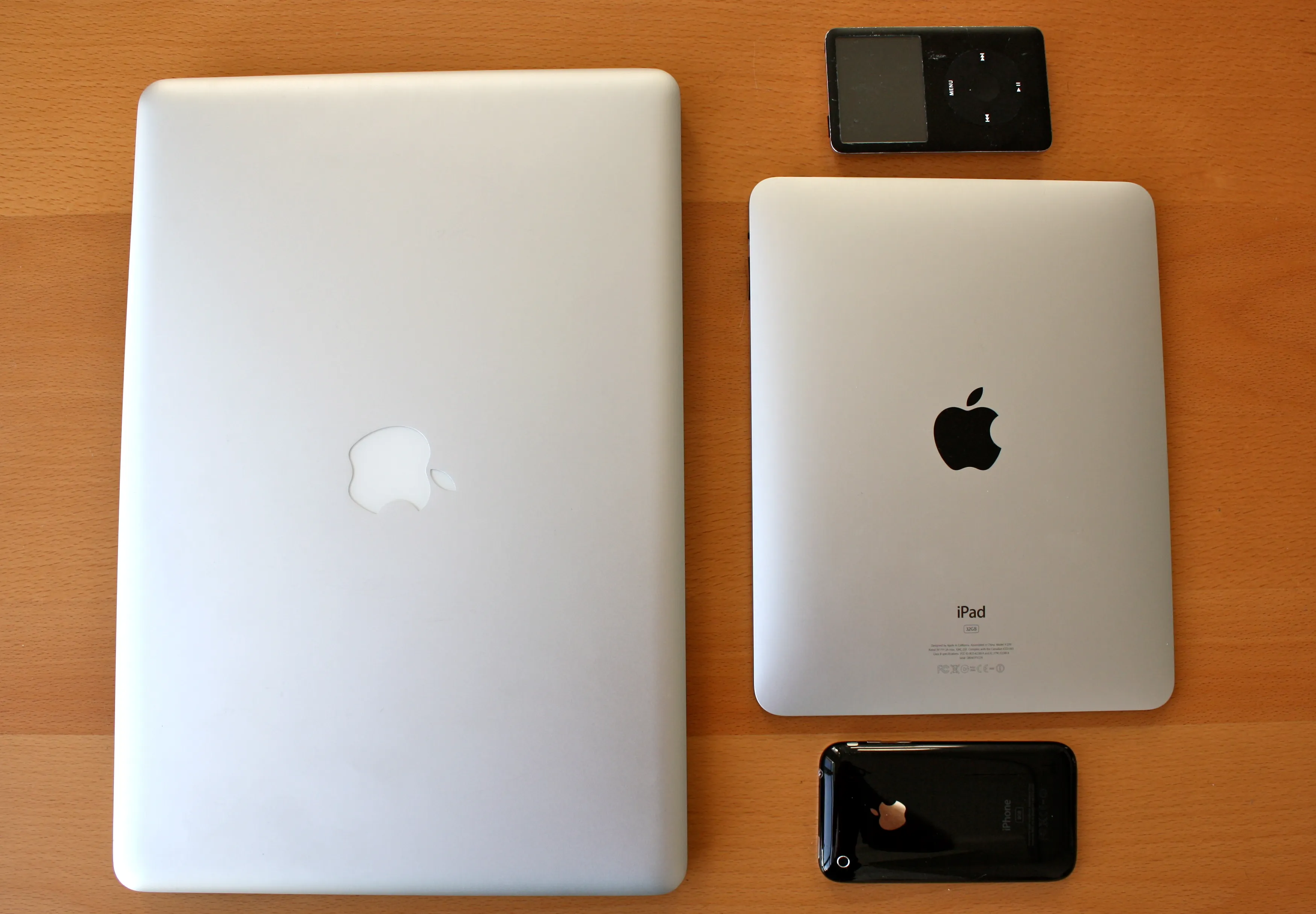
I now have an iPad. Sarah surprised me with one for our anniversary, and I’ve only had a bit over a full day to play with it, but I think it’s a pretty damn revolutionary device. I had my doubts when it came out, especially because I already had a very capable iPhone for pocket-oriented computing and a top-of-the-line MacBook Pro for my full-time yet portable workstation. So what the hell do I need a tablet for?

Okay, first, the hardware itself: technically, it’s pretty solid - very thin, very light, seamless usability, and flawless integration with the other Apple stuff I have. The display is amazingly clear and the perfect size. The iPhone in general has pretty decent speed, or at least the perception of speed. I think that’s an important difference; I’ve used Windows Mobile phones that were CPU giants, but still stuttered and clunked along because nothing was seamless, and you were mushing your way through endless layers of lipstick on a very well-hidden pig. The iPad is an order of magnitude faster than the original iPhone from a hardware perspective, although it’s not running a version of iOS that’s as optimized as it could be. (It also doesn’t multitask yet, like the latest iOS 4 machines.) But going from app to app is pretty damn snappy, and I never really hit any stutter or pause or other issues.

Web browsing on the iPad is pretty much perfect. It makes the ideal machine to use when sitting on the couch or in bed, and that’s pretty much the use case for this, as a sort of appliance computer, like those things in Star Trek that you just whip out when you need to look up technical information about dilithium crystals. It’s weird that the machine has no natural “up” direction, and it doesn’t care if you hold it landscape or upside-down landscape; it corrects itself just fine. And something I didn’t notice for almost a day: it has a lock button that locks the orientation, so when you’re sitting in bed on your side, it doesn’t flip orientation on you, which is one of my annoyances when I sometimes check my email on my phone before getting out of bed in the morning.

I think the weird thing about the iPad is just that it’s so polarizing of a machine, because it’s a niche machine in price and marketing, but it does so much from such a simple design. It’s not a specialized device like a phone, that makes calls and stores contacts, and then the solitaire game and calendar are an afterthought shoehorned into its form factor. It’s very much the 90% of what you’d do on a computer, sitting in front of you in this 680-gram viewport into a digital world. And the tech world is divided between people who get this, and people who don’t. It’s always been true of Apple products for a while, but the iPad is the clearest line in the sand.

The deal is, a lot of people judge technology quantitatively. It has to do the most; it has to have the most RAM; it has to have the highest benchmark; it has to have the most megapixels. It’s classic penis-waving at its best, and it’s a very right-wing sort of way to view the world, because you can have a one-megapixel camera that takes far better pictures than a crap 10-MP plastic-lens, cheap-chip camera built into a cell phone. (Don’t believe me? Take a look at any image from the Hubble space telescope. That thing has a camera smaller than one megapixel. Yeah, it’s sitting behind a few million dollars of optics, and its images are typically pieced together with expensive software from hundreds of exposures, but it’s a good example that the raw megapixel-to-megapixel comparison is flawed.) It’s a lot like shopping for a car and only using horsepower and torque as your only metric for performance. Which is a nicer car to drive, a used Dodge Ram pickup truck, or a Maserati Quattroporte? The Dodge has more horsepower and more torque, but it’s not quite the same overall experience. I feel the same way about people who go on and on about how their computer or their phone has more memory or more storage or whatever - that’s great, but when you’re running an OS that’s bloated and runs code to meet some legacy requirement set up in 1989, it’s not the same deal.

And when I google around various iPad news, I see a whole lot of “well it can’t do everything my desktop computer can.” Of course not. You can’t haul lumber or strap six kiddie seats in the back of your Ferrari 458 Italia. But does that mean you have to drive around an extended-bed truck every time you need to run to the store for milk, just because once every other month you need to pick up a pallet of drywall? I saw someone in a thread bemoaning the iPad because you couldn’t rip CDs on it, which is an absolutely asinine argument. It’s like arguing against the adoption of the car because it won’t give your horses exercise. You don’t need the horses if you have a car; you don’t need to rip CDs because you can just buy music from iTunes and zap it across the ether a million times faster than trying to actually find a store that still sells CDs that don’t suck.

It’s the same argument when someone says “there are 18,273 programs to burn DVDs on Windows but only a couple for the Mac”. But when I need to burn a DVD, I don’t want to have to spend a week shopping for authoring software and memorize what IRQs are in use on my system and read the entire history of laser-written media; I want to put in a blank disc and click a button and that’s it. I don’t care if the hardware is ten percent slower, if it saves me hours and hours of tech support insanity.

Anyway, that’s the story. I’m sitting on the couch and tapping away and in a second I’ll zap over to see how the game went. This thing is truly awesome.

River of stress

I continue to stress out over the move.  I have two painters coming over today for quotes on patch/paint on the old place to get it ready to sell.  I have no news and no commitment on when we will get keys for the new place, so I’m now putting together the contingency plan so that when on Friday they tell us, “oh, maybe next Friday, or the one after that” I can scramble and try to reschedule the dozen things that will happen in the next few days.

I bought a KVM yesterday, a DVI one and the adapter I need to hook it up to the new work laptop.  I’m currently dragging both computers and my four-million-pound 20” LCD monitor to the kitchen table and working there.  I’ve started using the LCD in portrait mode, because it rotates 90 degrees, and I find it pretty helpful while writing and editing.  I can open two full-page views, one on top of the other, or one really long page, and avoid a lot of scrolling.  I’d like to do this from now on, although my monitor stand is slightly shaky like this.  I’ll be glad to have the KVM - I currently keep the mac running, mostly to run iTunes all day and to keep my mail open, and I have it sort of behind my other computer, so I have to look around to see it.  I work the music with the remote, and that’s fine, but when I do look at the mail, I have the bad confusing habit of trying to move the pointer with the wrong mouse until I realize what the hell I’m doing.  I’ve thought about one of those systems where you can hang multiple displays on one set of input, and can drag windows from the Mac to the PC or whatever, but I’m sure they all involve some form of VNC that will bog down machines or require jumping through network hoops that I can’t deal with right now.

I also found a NeXT VMware image at http://osvirtual.net/en/nextstep-3-3-with-drivers-vmware/ and fired it up yesterday in Fusion.  I got it to work with no real problem, except I’d forgotten about a lot of the weird quirks about the NeXT interface.  And I think a lot of the allure of it back in 1991 was probably that it was a generation ahead of everything else out there, and it ran on the cool black hardware.  I like the idea of a NeXT cube, but I think clunking along on a 25 MHz 68030 is probably not ideal.  Back when a Mac IIfx was a speed demon and cost you $9000, the NeXT was a steal.

I just went off on a browsing tangent, reading about the IIfx.  It’s weird, it was the fastest Mac until the Quadra AV came out in 1993.  And in 1995, I had the Centris version of the AV at work (the Centris 660AV) and I had the same machine when I went to WRQ in 1996.  And in both cases, they were already doorstops at the time.  Like I remember when MP3s were first starting to become popular, and I downloaded some MP3 ripping software and popped a CD in the player (actually into the required caddy, and that into the player), and it took roughly two days of running day and night to rip the 9 tracks.  There are times I romanticize old hardware, but then I remember how clunky the stuff was back in the day, and I’m not as fond of filling up my storage space with it.

System emulation time machine

I’m always talking about time machines, touchstones that launch you into nostalgia for some forgotten era of the past.  There’s one that I mess with that’s infinitely more detailed than any other, and it’s system emulation, which was once just a vague dream and is now huge and all-encompassing.

I guess it all really started in the 80s, when you could get the box for your Intellivision or Colecovision that played Atari 2600 games.  And that was a kludge, because it was nothing more than an actual 2600 that hung off the side of your existing system, so you basically used your Mattel power supply, joysticks, and connection to the TV to play Atari games.  Then the Commodore 128 had a Zilog Z80 CPU in addition to its 8502, so you could boot into CPM mode, which was great except none of us cared about CPM or running ancient crusty old office productivity software.  Later there was a lot of talk about the Amiga being able to emulate the Mac or run as a PC with external hardware, but I never knew anybody that really did this.

Fast-forward maybe ten or fifteen years, and I’m in the period when I’m firmly planted behind a desk in cubeland and want to relive the days of 1985, so I’m scouring eBay for a good Commodore 64 and 1541 and maybe an Amiga 500 or decent Atari 2600 setup.  And I’m spending my spare time browsing all of the web sites out there for 8-bit computers, now that there’s a whole world of freaky Finland hackers posting all of this crazy stuff on the interwebs that’s knocking loose the rust in my brain and making me remember to SYS 49152 after I load some ML at #C000.  And around then, some people started writing software that ran in a modern Pentium computer that would emulate the C-64 or the 2600 or any other old machine.  Because by then, you add all of the overhead involved, but you run it on a fast PC, you’ve pretty much got a 6510 running at 1.023 MHz.  The other major factor is that nobody can even keep track of who the hell owns Commodore these days, so there aren’t a bunch of cease-and-desist lawsuits over the ROM images, and a ton of the games are floating around.  That’s the other great thing: in 1985, you spent all day waiting for your 1541 drive to slowly load in that Zork game.  But now, a complete ISO of a 170K SS/SD floppy is smaller than the image of a rounded corner on a web page.  You could go download a thousand games at a clip and barely spike your bandwidth.

And this is truly amazing to me.  Because you can look back at some old era and look at a posed photo that’s two-dimensional and unmovable, or listen to a tape of some audio of an old song or an old conversation, and that partially captures a moment.   But this is trapping an exact bit-by-bit representation, a living and working version of the same environment you basically lived in decades before.  It’s like being able to download some magic thing that would recreate your college dorm room down to the last millimeter, every single detail and quirk and bug and problem, and you could step inside it and relive it.  I could sit at that BASIC prompt and look at every single one of the 65,535 bytes in that system, and run every old game that me and Matt Wanke would stay up all night playing back in the 8th grade.  I could load up Blue Max, the very first game I ever played on the C-64, and fly that little biplane through the weird 45-degree angled world, dropping bombs on the 320x200 terrain that scrolled past.

I spent a lot of time back at the blue and cyan screen, trying to type in some BASIC, playing some old games, and that was decent.  But what really pushed me back into the past was when MAME games started coming out.  MAME was an emulator that could simulate many of the common arcade cabinets that lived in the 80s and 90s.  Game cabinets weren’t all one-off creations; each vendor typically had some common chassis or series, so they could just pop out the ROMs from a dud game and pop in something new.  It wasn’t always that straightforward, and you had systems that mutated over time to add new features or new hardware or whatever, plus you had some games with weird joysticks or buttons.  But if you got bored of your X-Men game and wanted the Simpsons game, it was a straight switch.  And that made it easier to write a common emulator for a bunch of different ROMs.  And once I got MAME running on my laptop and started tracking down ROMs, I was absolutely hooked.  There were two games that were total time machines for me, because I spent so much time pouring quarters into both of them.

The first one was Smash TV.  Me and Ray used to play this constantly, back in like 1991.  When I went to IUSB, we never went to class, and would always drive around South Bend and Mishawaka, listening to death metal, looking for something to eat, something to do, and of course there was nothing.  So we always ended up at the arcade at University Park Mall, and we’d dump unending amounts of money into that game.  It’s basically a rehash of the movie The Running Man; a future where prisoners (in the game, the prisoner part was not mentioned) have to run through mazes killing mass numbers of robots and mutants and warriors with futuristic laser weapons in front of a televised studio audience in order to win money and prizes.  It’s a typical quarter-eater, where two guys can play, and you just shoot every damn thing that runs at you, and if you die, you just need to shell out another token to keep rolling.  The game has a lot of synthesized speech from the Richard Dawson game show host, saying “BIG MONEY!  BIG PRIZES!  I LOVE IT!”  And it’s one of those weird memory things, where I can’t remember my office phone number, but every single millisecond of this game is burned into my head so much that I can instantly repeat any of the lines or hum any of the music within it.  So when I pop it up in a window on my Mac, even though I don’t have the joysticks and have to use a/w/s/z or whatever, it instantly takes me back to those days of playing hooky and feeding quarters in a mall arcade that’s now probably a cell phone store or a place selling uggs or something.

The other game that I have memorized like this is Golden Axe.  This is a Sega ripoff of the Conan franchise (barbarian, not talk show host, although that would be a cool game too, with Andy Richter at your side dressed up as a wench, and broadswording Jay Leno in the head.)  It’s very similar to Altered Beast (also done by the same design team), a side-scroller with two (or was it three?) sets of joysticks and buttons, and you dumped in the quarters to continue.  You could be a barbarian, a dwarf, or an amazon woman (a tall Hilary Swank-type warrior, not a woman that buys a lot of books online on a Kindle.)  They had one of these in the tiny arcade in the Indiana student union, and they only had maybe five games, and all of them sucked, but this one sucked the least, so I was sort of forced to play it when I was killing time in there.  I’d rather go to Spaceport and play some Tetris or find a Smash TV console, but it was one of those captive environment things, and within a matter of time, I got hooked on Golden Axe.  I think it’s a funny game, because all of the various screaming sounds in it are too accurate and over the top.  I was playing this once when Sarah was in the next room and she came in and said “what the hell is that?  It sounds like some kind of Lil’ Jon krunk video game.”  But once again, all of those little sounds and sayings are etched into my brain, and when I fire up that ROM in a Sega 16-B cabinet emulator, I’m back to the student union in 1989, between classes and wasting time and quarters.

I thought of all of this because I was cruising around and wondered if anyone had ever installed NeXTstep in a VMware emulator, and I guess a few people have tried.  I wanted to just find someone who did the whole thing and had a VMware image I could download and fire up, but it’s considerably more difficult than that, setting up all of the drivers and crap.  Here’s a post on how to do it, though.  I think sitting at an OmniWeb browser in a NeXTstep login would be a pretty severe time warp for me.  I spent a lot of time lusting after that hardware when it first came out, and spent a good chunk of 1991-1992 trying to get some time on it.  It’s funny how fast the fall from grace was, though.  Those machines were total demons in like 1991, and by the time I got to the support center in 1993, we had a slab that was practically a doorstop, it was so slow.  But maybe if you took that awesome (in 1991) OS and dropped it in an emulator on a quad-core x64 i7 chip, it would be 5% faster than it was back on the 68040.  Something to mess with, but probably not during the same week when I have to move.