The Wrath of Kon

Dispatches, thoughts, and miscellanea from writer Jon Konrath

Rush, SAP Arena, 10/15/26
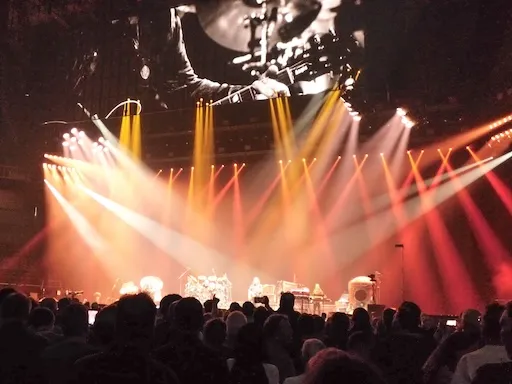
Rush

Never thought this would happen, but I saw Rush again on Thursday night. This was my fourth show, fourth state, fourth decade. After the death of Neil Peart in 2020, most of us assumed the band was done. And I kicked myself for not going to their last tour when they went through San Jose. So when they announced last year that they were getting the band back together with a new drummer and hitting the road, I immediately went to TicketMaster (ugh) and did as good as I could to get a single ticket in their presale.

That was October 2025. After sitting on the tickets for a full year, I drove down to San Jose after work. SAP Center is the home of the San Jose Sharks hockey team, and is a 20,000-seat arena a bit over from downtown San Jose. I’d never went, but I knew the drive to San Jose would be a pain, and it was. The fifty miles took about two hours, but I bought parking ahead of time, and got there super early, so that was pretty painless.

I paid far too much for a VIP package, and they really have the monetization tiers in full effect for these shows. I got the “Superconductor” package, which meant I got in a special entrance a half hour before everyone else, and there were only a handful of people ahead of me. I got a laminate with a lanyard, a small travel bag, a Yeti coffee mug, and “the opportunity to buy special merchandise” (of course). I picked up a $50 shirt and thought about a tour program, but I’m trying to cut down on collecting more stuff, so I’m good.

My tickets were insanely good. Not only were they the best seats I’ve had to a Rush show, I think they were the best I’ve had to any show. I was on the floor, 23 rows back, in the outside aisle on stage left, Geddy’s side of the stage. I was not at whatever tier had the special VIP lounge and I didn’t see where that was. But these seats were about 75 feet from stage, which were absolutely phenomenal.


I last saw Rush in 2002, on the Vapor Trails tour. This was at MSG in New York, and I guess I didn’t blog about this, didn’t bring a camera, and didn’t write anything in my outgoing email. I just found the ticket stub, and I’d paid $94 to sit in the 7th row of section 104, which wasn’t bad. I had to leave for Vegas the day after the show, and I was sick and loaded up on DayQuil. The weird vibes from this show, aside from not seeing the band since 1994, was that Neil’s daughter and wife had died a few years prior, and this was his first tour back. And I had my own weird vibes at the moment. I was buried in a deep depression at that moment, not sure what I was doing with life, in a funk over Rumored to Exist coming out earlier that year and after seven years of work, suddenly not having a writing project on the front burner.

Rush is an instant time machine for me, a window back into my teenaged years, when I was first obsessed with the trio, and spent every waking hour memorizing their albums. They were the bridge from me listening to Top 40 of the Eighties to the beginnings of thrash metal, prog rock, and everything else that followed. I only knew a couple of people into the band, it became this secret club, an escape from the pain of my reality growing up in a Midwestern town with nothing but a burning desire to escape. (The Rush song “Middletown Dreams” is almost exactly about this, and that deep cut meant a lot to me back then.) Rush isn’t a day-to-day thing for me. I listen to a lot of other music, but maybe once a year, fall down a rabbit hole and dig up the albums and start looking things up online. It’s a nice escape, a touchstone.

But on that 2002 tour, I did feel strange about something. The show was a portal to the past; they did play a lot of deep cuts, things from way back that weren’t in the rotation anymore. This was also nice for me because the new album didn’t really click with me. Geddy Lee’s voice wasn’t entirely there, and he struggled on some of the old stuff. It was good to see them, but the energy was somehow off, in a way I couldn’t explain. I thought maybe I’d outgrown them, or maybe they were phoning it in, or… something. I couldn’t put my finger on it.


24 years later, and I didn’t know what to expect. What I really didn’t expect was that I’d be a few dozen feet away and see a fog-filled stage as the curtain went up, and the first notes of “Xanadu” from their 1977 album A Farewell to Kings come up. One would expect a greatest-hits retrospective to start with “Tom Sawyer” or something similar, so to see them launch into an 11-minute complicated deep cut was mind-blowing.

The evening continued on like this. The set lists for the tour, all meticulously tracked online, were absolutely insane, filled with songs that were no longer played live, dropped from the roster ages ago. Plus, almost like they had a point to prove, they played many long songs. Of the 21 songs they played that night, 12 of them were over five minutes long. And speaking of 2112, they played that side of the album in its entirety. If I told 17-year-old me that I’d be watching them play all twenty minutes of that 1976 album, I would not have believed it.

Anika Nilles, the new drummer: good choice, great player, and she was more than capable in keeping up with the band. This has been written about endlessly, and I’m in agreement with all of that and I’m happy that didn’t turn into a huge disaster with the fans. Also a bit odd, but they filled out the band with keyboardist Loren Gold, who also helps with backing vocals.

The band sounded good; the show looked great, between the lighting and the various kinematics and videos. The crowd was obviously very into the band being back, after everyone thought they were done and over with. Everything was great. But.


I’m hesitant to get too into this, especially because Rush fans are so hyper-exacting, I fully expect someone to tell me “I’m wrong” for having an opinion here. But once again, something felt off to me, and I felt it much more than I did in 2002.

I talked to people before the show, because there is this family, this secret club we’re all a member of, and it’s good to chat about what our first show was, what albums we liked the most, what instruments we play, and so on. The thing is, all of us are now old. I’m old. I’m bald. We’re all bald, wrinkled, bad backs, bad knees, everything else. I get it. But so many of the people I talked to were so stuck in a deep nostalgia rut, the “Music was so good when we were kids and now it’s all this damn auto tune and rap and what is alternative anyway and pull your damn pants up.” Old Man Yells at Sky. It was so depressing, and it made me wonder, “Am I this depressing to talk to?”

And after hearing everyone ramble on about their lost youth, we see the band. Geddy Lee is 73 years old and looks it. Alex, same. As I was watching them, all I could think about is how they looked a generation more aged than last time, like their gait and their posture and their faces all looked so advanced. And for as much as everyone talked about how great Geddy Lee’s voice is on this tour (it was infamously blown completely out on the last few tours in the 2010s), you could tell they were five months into a tour where they’re playing three hours a night. In the second half, Geddy’s voice was noticeably off. I mean, sure I would not do good on any of this stuff as a 25 year old, let alone a 75 year old. And the sound at SAP is notoriously bad, so maybe that was a factor. But to me, I noticed it.

This started a tight eval loop in my head. I was really into Rush as a teenager. Every album bought on the day of release and memorized; every note of every song analyzed and scrutinized; every trip to the record store I ran straight to the R section, thinking maybe some elusive bootleg showed up on CD. Me and my friend Derik, who is the best drummer I know, absolutely worshipped at the altar of Rush, when it really was not cool to do so. They were my first real concert, and for a while, every band I listened to was because they were either a peer band (Yes, Genesis, etc) or the next generation (Dream Theater, Metallica) or an influence of theirs (Zeppelin, Hendrix, Cream). So they are very heavily burned in my brain. And then I think of that, and I see them on stage, hunched over and trying to hang in there, and I think about my parents and I think about me and I think about all the bald guys in the audience stuck in 1976 and I think about the end game here, and it’s incredibly depressing.

And the whole “music is no good anymore” thing. There is so much good music out right now. The only problem is there is too much good music, and it’s all free and available and out there and there are no barriers to making it. The problem is too many choices, too much. And that’s going against this strong feeling that I only have so much time left. I don’t have the free time I had as a teenager, and my relationship to music has drastically changed. And that makes me worry that I need to make more effort or have a better process or better invest my time in this, which is also very overwhelming and depressing.

Anyway, much to think about on that fifty-mile drive home at night, and much to think about going forward. I loved the show and loved the glimpse back, but how do I reconcile all of this and move forward?
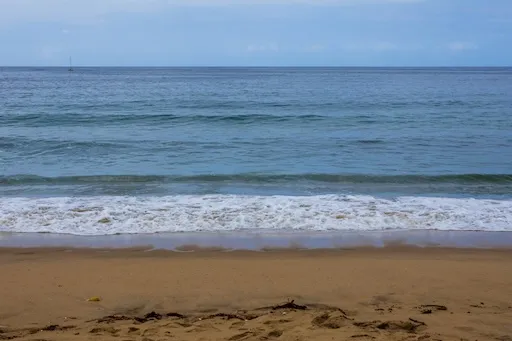
Manhattan Beach

Dockweiler Beach

Took the week off last week and headed down to LA. This was a make-up trip off for a botched trip to Bosnia in August, just a bit of a placeholder visit. Sarah had a work trip and I decided to tag along. Her company flew her, but I decided to drive down, since I haven’t taken the new Prius on a trip much longer than the 25 or so miles from my house to the dealership. It ended up being the worst possible weekend in history gas price-wise, but I get about 55 MPG on the highway, so it wasn’t a huge hit.

It’s always weird for me to take a trip in my own car, since I seldom do. I never pack until the last possible second, and this time I did with absolutely no thought on weights or limitations, simply throwing stuff in bags the night before I left. I packed far too much film, plus two film cameras, my Canon R10, and too many lenses. Almost brought a tripod too, but I knew I’d never drag that thing around all day.

The drive down was typical, uneventful. I’d done this same trip in 2021 albeit with the 2014 Prius C. The 2024 Prius LTD is a much nicer highway machine, because I can put it on cruise and the adaptive lane guidance stuff takes over and I can pretty much just zone out and take in the scenery. Not much scenery on I-5, though: lots of farms, the crops pretty much gone for the season, and the occasional windmill.

We stayed at the westdrift, which is a Marriott Autograph Collection thing, on a 9-hole golf course, right off Rosecrans in Manhattan Beach. The Marriott Residence Inn from 2021 is exactly one mile north of this hotel in El Segundo, and it’s about five miles south of my 2008 apartment in Playa del Rey. So, I’m familiar with the area, or I thought I was. What’s amazing is how much it’s changed, even since 2021. There are wide swaths of upscale strip malls and big-box stores and outdoor shopping centers that magically appeared out of nowhere, plus hotels and apartments everywhere. Every car wash or Citgo station from 2008 is now a Shake Shack or Goop Kitchen. This is astounding to me, because in every other part of the country retail is dying, but it feels like it’s growing exponentially there.

I had zero plans for the trip, except I wanted to go to March AFB in Riverside and see the SR-71 there. The drive out took about 90 minutes, and I feel like the temp rose maybe twenty degrees when I headed inland. There were over 100 planes there, mostly outside. Inside, they had the 61-7975 SR-71, and it’s in great condition, all sleek matte black paint and lots of extras on display, like the starting cart and camera pods and such. Other oddities include the YA-9, Northrop’s failed bid for what was one by the A-10; a half-dozen MiG jets; and a Top Gun TA-4J “MiG”. They also had multiples of several aircraft, like three different F-4s and three variants of the F-86. They also had many large aircraft, like a B-52, a B-47, a KC-135, and the first KC-10 I’ve seen up close. (The KC-10 is weird to me because I think of it as “new,” having been introduced in 1981. It was retired and stopped flying about two years ago.) Anyway, good collection, but the heat was unbearable, and I was dragging around two cameras, so I only hung in for an hour or so.

Me and Sarah took a day off to explore a bit, mostly driving through the old neighborhood to remember what was and what is now gone. We also went to Santa Monica for lunch. The promenade was largely abandoned, which was a bummer. The ocean view and that little turn you take to get down to the PCH was stupendous as always. We went downtown to check out The Last Bookstore and I bought a few rolls of film from a small stall on the second floor, a cool place with vintage cameras and typewriters and stuff.

There were a few dinners with coworkers of Sarah’s, but I mostly just lolled around and did little, walking and driving and looking at things. Made the mistake of looking at Zillow and seeing how much the houses by the golf course cost. Also made the mistake of checking in on work and getting pulled into a few phone calls. But otherwise, I mostly did nothing, which was fine.

Drive back was pretty easy on Thursday, made it back in just under six hours with just one stop outside Bakersfield. I probably took my favorite picture there, which my iPhone, negating the effort of hauling all that equipment in my car. I guess that happens sometimes.

The Stack

OK, so I’m back on Substack.

TL;DR: jkonrath.substack.com. Like and subscribe.

I briefly tried this before and got a bit locked up for a few reasons, the biggest being a lack of time. I still have no time, but I’m between projects, so I’ll give it an honest go and see what I can get started.

The main motive is to get a different set of eyeballs on stuff. I have no idea how the algorithm works there, and I’m not really trying to chase virality or expect magic. But there’s absolutely no chance of cross-pollination in publishing out in the open web anymore, and Google searches are largely useless. I personally want to find things to read and all social media is largely the same garbage amplified for the election season. It would be nice to find other writers and writing.

One of the challenges here is I don’t know what I will blog here at Rumored versus what goes to the Substack. I have over a million words of stuff here, and some of it could be worthy of republishing to a new audience. I’ll look into that. A feel slightly bad about recycling content, that long-time readers will see new posts and realize they already read it in like 2014. But some of it might be worth revisiting anyway.

I do want to focus on new material, though. The real question there is what new material and what type of material. I think any time a new bucket appears for me to throw stuff into, I worry far too much about persona and what kind of writer I need to be to fit things into that bucket. This is particularly worrisome to me with Substack because there are very specific types of writing there. It’s very newsletter-oriented, and the most popular stacks are journalists writing articles, or facsimiles thereof. That makes me want to write some Chuck Klosterman-like things, critical analysis essays or nostalgia pieces, and that’s not the kind of writing I necessarily want to focus on.

This reminds me of when blogs became a big thing in about 2002 or so. I’d already been blogging for years, although I didn’t call it that, and I didn’t have an overall theme. It was more of a personal journal that was live to the internet. Sometimes I would write articles, but not on a specific, specialized theme. And the people who were blowing up and getting book deals and millions of views were writing highly specialized things. Of course I was jealous of that and it irked me. But it also reminded me of when zines were a big deal in the 90s, and then everyone saw them as a gateway not to true DIY craftwork, but as a stepping stone to commercial publishing. I loved stapling my own zines and mailing them to people, creating things, having a connection with people. But the people in the alt.zines Usenet group were arguing about bar codes and distribution in chain book stores, and it all got stupid.

I see the same thing with Substack, the people Producing Content to Build their Brand. I have no interest in that, and don’t even know how it works. I haven’t turned on the paid subscriptions, and I’m not sure I will. I do want to find new people out there, but I’m not terribly interested in writing SEO-tuned Content.

And as always, there’s a very high chance in a month, I’ll say all of this was stupid and stop doing it. But we’ll see. Anyway, jkonrath.substack.com.

About Atmospheres 2

Atmospheres 2 book cover

Ninja weapon shortage. College football shoe scandal. Record humidity — supersaturation — dew point of complete absurdity. A group is claiming they have the legal constitutional right to storm the cockpit of any commercial flight and take over the controls of the jet because Jesus said you can in the new American edition edible picture Bible. On some Sunday morning talk show, an old man in a Punisher muscle shirt pointed at the fine print on the back of a yellowed Hooters Air ticket, interspersed with the same commercial for a meat gun filled with liquid bacon the station played every 90 seconds. A few days from now, seventeen flights would get emergency diverted, two shot down by F-22 interceptors. A thousand deaths, eight million dollars of AIM-120 AMRAAM missiles in action, who knows how many insurance settlements for families of the deceased. People don’t know when to say when anymore.

Atmospheres 2 is out now in print and on Kindle. There’s not much more than the back cover description out there, so I thought I’d talk a bit more about the book.

Atmospheres 2 is an experimental novel that’s about living in an apocalyptic world where reality is no longer real, or it’s impossible to separate reality from several chaotic monetized alternate realities that people think are real. Sound familiar? It’s not a conventional high-concept sci-fi thriller with a solid plot device to carry you through a precise three-act arc where the anti-hero saves the day. It’s a full-on barrage of absurdity, a collage that covers several distinct themes throughout the book.

When I say experimental, what I mean is there isn’t a conventional narrative, but instead a series of loosely interconnected stories with recurring characters and motifs that follow a through line through the book. It’s 100 segments, arranged in three acts, each segment a thousand-word world of its own. Half of them are third-person and half of them are first-person, following an unnamed Trusty Narrator through the chaos. At one level, it’s like flipping through a hundred random channels of cable TV, tuning in to a specific story or scene, then changing the channel. But sometimes an idea appears, vanishes, and comes up later in an altered form, consistently poking at the question, “What is reality?”

The book takes place in a near-future reality, a shifting landscape of corrupt corporate America, dead malls, abandoned cities, desolate highways, anonymous hotels, and the debris of a failed society that’s been pumped full of stimulants and electrons of every format. Aside from the interleaving pieces jumping between the Narrator and reality, the book shifts from conversation to road journal to cable news to corporate press release to cultural criticism to disaster reporting.

There are three distinct acts in the book, and they help define the different themes that run through the entire novel:

  • Act 1 - Atmospheres focuses on the alteration of perception by technology. Social media, fake news, corporate prestidigitation, and manufactured celebrity are all explored. I know this can be trite and overplayed these days, and everyone’s writing about enshittification and why kids need to get off their damn phones. I think like the other themes in the book, I don’t lean in too hard on one side of the issue, but just show the absurdity and madness. This questions whether reality is real or just an unstable simulation built from brands, sound bites, manufactured media, and algorithms.

    I write a lot about the hellscape of unchecked corporate consolidation. It’s a world 99% owned and operated by the Fortune 5, where the same hedge fund that owns Arby’s, NASA, and Comcast also has control of the Air Force Global Strike Command and 2/3s of the American nuclear triad. Amtrak is now owned by Chuck E. Cheese, which is owned by Fairchild Aircraft, which is a division of Amazon. Pfizer bought Jack in the Box so they could sell their own customers heart medication. Boeing (which is a divsion of McDonald’s) had their sister company Northrop Grumman buy Proximo Spirits to distill fuel for their space program’s rockets. It’s all unregulated. It’s all for sale. It’s all completely absurd, but at least three times in the last two years of writing this book, I had to completely change a major plot line because something actually happened in real life. (Pizza Hut really got bought by a private equity firm that sells coffins? Yep.)

  • Act 2 - Nightmares is about how this altered reality surfaces as violence and chaos. The main theme in this part of the book is “the cruelty is the point.” Corporations monetize suffering; authority turns to brutality to feel powerful; politics becomes completely corporate, only existing to turn resentment and loathing into common identity. The spectators of this reality watch on the sidelines until the sidelines collapse into disasters, plagues, and a catalog of horrors.

    The Narrator experiences what I feel every day: how do you navigate this when you don’t feel like either side? When nothing is real anymore, what is your reality? When the corporate ladder collapses leaving nothing to climb, what do you do in life? Does this hyper-reality of artificial identity mean you’re locked into the identity you formed with your social media, online purchases, and corporate history? Or does everyone’s obsession with this chaos and your lack of importance in the world mean you have total freedom?

  • Act 3 - Visions is where the book turns much more surreal and dreamlike, where time loosens and reality completely collapses on itself. No spoilers here, but as the outside world turns to a complete apocalypse, the Narrator’s inner world drifts into a place where memory, fantasy, and experience completely melt into each other.

Oh, and it’s a comedy. Many LOLs ensue, trust me.

This book is probably more political than any of my other ones, but I don’t lean heavily into hack political satire. It’s also, despite everything that happens on the surface, probably one of my most deeply personal books. It’s about aging, regret, resentment, depression, and mortality. It’s about attempting to escape, be it with work, travel, addiction, food, or nostalgia, and how none of those provides a real exit.

Like I said previously, it took me almost 12 years to write this book. It constantly mutated as I changed and the world changed. I don’t feel I could ever really finish it, so I’m happy I was eventually able to reach a stopping point and present this to you. I hope you get a chance to read it.

Out now: Atmospheres 2

Atmospheres 2 book cover

I’m happy to announce that my twentieth book, Atmospheres 2, is now available on on Rumored Books.

TL;DR:

Atmospheres 2 is an experimental novel about living in the chaos of a world where reality has become impossible to separate from the machinery that creates it. It’s a panorama of anxiety and existential dread set in a chaotic place where corporations and politics have become intertwined to the point of absurdity. The three acts of the book follow an unnamed character simply called Your Trusty Narrator, as he stumbles through an alienated life of corporate underemployment and altered reality. He struggles on a Sisyphean journey to find meaning in an existence that is quickly collapsing on itself, wondering if he’s the only person who notices.

This book is a sequel to my 2014 book Atmospheres, although it’s not a direct sequel with the same cast of characters, continuing the last book like a Spider-Man movie. It’s the same world, some of the same settings, the same general tone and philosophy. It’s also made of 100 segments arranged in three acts, alternating between first-person and third-person. But it’s more than twice as long (544 pages versus the original’s 242 pages), and I think the writing is a bit more dense, so there’s a lot going on. I think many readers will think the book is entirely plotless, but in some ways, it has a stronger underlying plot than most everything else I’ve written.

I’d like to think I write fiction, but I don’t even know at this point. It’s hard to be an absurdist when the actual news is far more ludicrous than anything I could write. This book is more political than anything I’ve done before, but it’s not a politics book. It captures a lot of the Kafkaesque inanity and dread about having politics devolve into a fully corporate swindle. But I think the main theme here is dancing around the larger question of identity a world where attention, self-identity, and reality has been completely strip-mined for monetization.

I started this book in 2014, and struggled for years to land it. It’s very much a “kitchen sink” book like Atmospheres and Rumored to Exist are, but I think it’s a distinctly different thing. It’s always a challenge to throw tons of everything into a manuscript and then try to arrange it with a through line, make everything jam with everything else. Coming up with the strategy of the whole thing and sticking to it was the hardest part to turn around, but like its predecessor, a lot of this is focused on the tactical level of having each segment be its own thing. I think a lot of people didn’t read Atmospheres straight through, but would open it to a random page and read one or two segments and enjoy them. I’m doing the same thing here, but it’s also something that someone invested in the book could read from 0 to 100 as a novel.

No, I did not use AI to write the book. I think I got a full manuscript done maybe five years before GPT-2 was even announced. I have a lot more to say about this, but I’ll save it for another post.

This is the longest I’ve ever worked on a single manuscript. It was interrupted by a lot of things: a pandemic, two graduate degrees, nine other books, two broken arms, and everything else in life. I keep a journal of notes in each book I write, and the one in this book is absolute madness. 24 hours of writing in Singapore, thousands of words of notes taken at the Ho Chi Minh airport, a bunch of editorial changes done while in Ulaanbaatar, Mongolia. There’s a lot more to say about the general history of this book and how it radically changed over the years. Something else to write about later.

Anyway, the book’s out. Hope you get a chance to check it out.