The Wrath of Kon

Dispatches, thoughts, and miscellanea from writer Jon Konrath

Ranch K-hole

Screen-Shot-2012-09-08-at-9.11.52-AM

Yesterday was a shit day for writing, not only because I still don’t have a project and I’m entering month three of the one month I decided to take to shore up an outline for the next book, but because my afternoon schedule was truncated by an chiropractor’s appointment, and after a couple of days on airplanes, my knees feel like they’ve been beaten repeatedly by a pro wrestling with a steroid addiction.  (I guess I that’s a redundant sentence.)

I lived in the era of bar soap, which apparently started a slow death in the late 80s, and now everyone showers with various liquid soaps, probably because, as my wife the product developer for a large commodity grocery item manufacturer tells me, the best two things to sell people are air and water, and if you can sell people less product and more water and charge them a premium, you introduce that much more money in the sacred vaults of the Cayman Islands banking system.  Anyway, back when we used bars of Zest or Dial to take showers, we’d end up with these little slivers of soap, thin remnants of a big rectangle eroded to almost nothing, but leaving enough of a pairing that my cheapskate parents needed some solution to the problem.  They bought this thing that looked like a cheap plastic version of a medieval weapon designed to cripple horses, or maybe the thing the California Highway Patrol extends across the road during a high speed chase to blow out a culprit’s tires.  The thought was that you’d impale the soap husks onto this ABS caltrop, and after you skewered enough pieces, you’d have this composite soap bar.

(Side note: this didn’t work.  The core of a soap bar somehow loses all lathering properties, and you’d only end up scraping yourself on the spikes, like some torture method devised by a splinter faction of the Catholic church in the Philippines that whips themselves bloody on Good Friday.  File this under “things my parents did to save a buck that probably permanently scarred me psychologically” and move on.)

I wish I had some functional version of this soap spike thing for my time, though.  I seem to have these few minutes here and there, and I should be using them to research a book or find new topics or new readers or new communities or whatever, and instead I spend them doing the Control-R knuckle-shuffle on my Facebook page.  Or, if I’m lucky, I dredge the web for some useless pursuit of knowledge, like trying to find the number of times each crew member shit on the Apollo 10 mission.

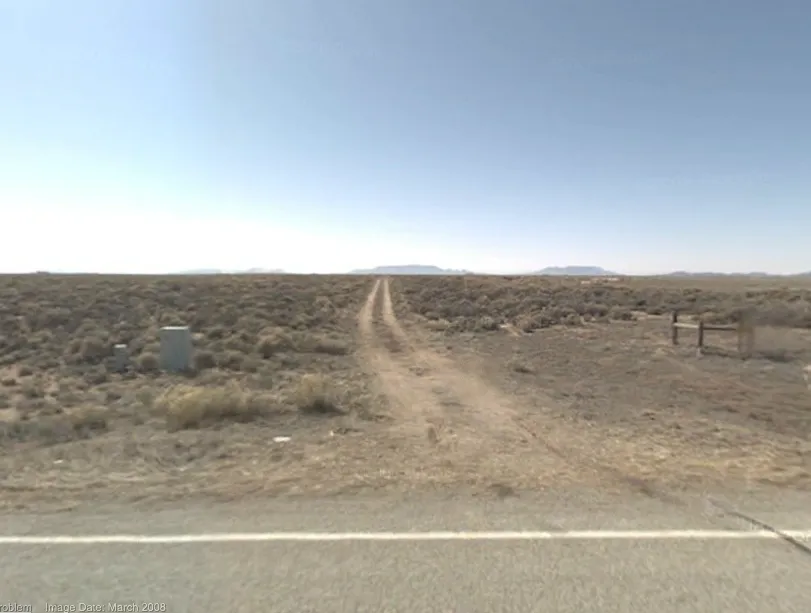
So, I ended up spending an hour trying to find out if anything was going on down by my land.  I own this 40 acres in southern Colorado, in the middle of nowhere, and every few months, I start the windmill lancing by pulling it up on google maps, hoping by some miracle that they put a Target store two miles away, even though the nearest town is maybe a dozen miles up the road, and has 739 residents, with a per capita income of $8,887, which is roughly the amount of money I spend annually on vitamins that do nothing except turn my piss a bright yellow.  There’s always hope that each visit will bring higher quality google aerial data.  This isn’t entirely in vein; they recently added Street View data on state road 159, the nearest paved road to my land.  Take a look at the screenshot above - if you turn onto that dirt road, drive a quarter mile, hang a left, and drive another quarter mile, you’ll be at a cul de sac with my land to the southwest of you.  But the hope is always that a combination of growth and satellite moore’s law-ing will allow me to see the trees I planted in 2007.

One thing I found recently was that a biodiesel plant opened a couple of miles from my land, in Mesita.  I drove through that city ten years ago; it’s not a “city” as much as it is a collection of a half dozen buildings, like a weird black lava rock church.  It feels like a ghost town, or maybe the outbuildings on the back half of a farm, long forgotten.  I guess in 2004, they plopped down a new prefab steel building that looks like a giant five-bay garage, and started smashing up sunflowers into oil that’s processed into diesel and purchased by the county for their vehicles.  I don’t know if this is sustainable, but it’s either that or meth, so good for them.

Another k-hole I haven’t fully fallen into is that the Southern San Luis Valley Railroad ran through this area.  I don’t know exactly where or when, but it seems like they originally had something like 30 miles of narrow-gauge rail out there a century ago, which almost immediately went bankrupt and got passed around in a game of insolvency hot potato for decades, finally being fucked into nothingness in the mid-1990s.  I do not have the patience to stumble through the geocities-level-quality web sites of railfans to piece together a history, but I am curious where the rails originally went, and if any of that is near my land.  I would drive out there and look around, but seeing as I can stand on my land and have no idea there’s a river just a thousand feet west, there’s no way I’m going to be able to find abandoned railbed that was torn out in the 1920s.

There’s also some vague connections to the UFO community in the San Luis Valley.  I think one of the cattle mutilation incidents happened in Mesita, but there’s not much in details.  There was a book, called “Enter the Valley”, that had a listing of various UFO phenomena in the area, and I used to have a copy, but it was a very open-ended list of reports, which wasn’t that meaty to me.  I have never been a huge UFO nut, because most of these reports are the same trope, the “I saw a bunch of lights, and I drove 17 miles down a dirt road, and saw some burnt grass, end of story”, and that doesn’t do much for me.

I haven’t been back to my land in five years, almost to the day.  When I lived close, I never went, because I sort of figured I’d always be able to go.  And when I lived further away, I never went, because it’s such a pain in the ass to get there.  I can now drive there, in 20 hours, which is a hell of a long haul.  Or I guess I could fly to Albuquerque, rent a car, and drive four hours; same for Denver.  (My sister in law now lives in Albuquerque, which probably means I should learn how to spell it.)  The issue is that when I’m far away from the land, I have these grand visions of building geodesic domes and digging wells and planting trees and paving roads and constructing camps and buying a dozen wrecked cars and erecting my own carhenge, but when I get there, I look at all of the desolation and nothingness and factor in that 49-minute drive to the tiny town with the nearest grocery store, and think “fuuuuuuck” and want to go back to civilization.

The idea of living on my own land is romantic, but I can’t deal with how to repair the stupid fucking dime-sized bubble that appeared at the seam of the laminated flooring in my condo; there’s no way I’ll be able to dig a well and trench out a septic field and run some power and do all of the basic crap I’d have to do to even drop a double-wide on the property.  (And I warn you in advance, please shut the fuck up about building a yurt or a haybale house or a tire house or whateverthefuck hippy idea you have about sticking it to the man by not using dimensional lumber.  They have zoning out there.  I’ve researched this far more than you’ve ever researched anything in your life. Not gonna happen.)

Okay, enough about this.  I need to dig myself out of this k-hole, put on some Hendrix, and actually write.

Half the reason I don't blog every day is I can't think of titles

IMG_0390

I miss the days when I didn’t use wordpress, because back then, my entries didn’t have titles.  I found it much easier to start brain-dumping babble onto a page when there wasn’t a blank title forcing me to somehow compose my thoughts into a single linear article or whatever.

So I just got back from a quick unannounced trip to Milwaukee, for a family funeral.  I’ve had three relatives die in the last two weeks; both of my wife’s grandmothers, and then my aunt.  I don’t like to write about family stuff, so I won’t, but there’s a lot of that brewing right now, which is not conducive to me sitting down and banging out the next great American novel.

I’m used to being in Wisconsin over the winter holidays, so being there during the end of summer seemed a little atypical to me.  Whenever I travel, I always wonder if my allergies will get better or worse, and it’s completely nonsensical.  For example, earlier this year, my allergies were horrible in the UK, bad in Hamburg, and almost nonexistent in Berlin, despite very similar weather in all three.  So I figured it would be a crapshoot on this trip, especially if I spent the majority of my time sealed in air-conditioned climates.  Unfortunately, the allergies hit me hard, and even at peak allergy drug use, I wheezed and hacked with blurry vision and reddened eyes.  Oh well - win some/lose some.

While on planes and in airports, I read two books that affected me, with different results.  First, I read that new bio of David Foster Wallace.  It was mixed, a bit fluffy, and uneven, with too much detail on dumb personal habits and not enough details on things like writing process.  I appreciated some of the information on the writing of Infinite Jest, but I swear if that dude mentioned one more time how Wallace liked to drape his wet towels over furniture, I was going to open the emergency exit of the 737 and throw the god damned thing out into the jet stream.

One of the things that bothered me the most about the book was that Wallace was undeniably a genius, which caused me far too much to think about how much of an idiot I am.  It made me wish I could go back to 1989 and not fuck around in college and get into grad school and start writing early and get an MFA when it cost as much as a large car and not as much as a large house.  There’s this huge force sitting square in front of me telling me it’s too late to do any of these things, and it’s the same force that tells me the 19 different projects I should be doing, which causes me to lock on doing any of them.  Couple this with a piss-poor reception to my latest book, and this constant thread of people around me dropping dead, and it gives me The Fear in a major way that I’m moving in the wrong direction with all of this writing shit.  It’s a demon that needs a serious beat down, and I’m just barely smacking it with some wet spaghetti.

I also read Pynchon’s The Crying of Lot 49, and that blew my mind.  It’s a nice short 150-page dose of his craziness, with incredible density and a plot that packs a lot of disparate ideas into a little book.  It made me want to sit down and bash out something like it, except I’ve already got at least two projects underway, and no time to work on any of them.  The thing that I liked the most about this book was the title, and how it was almost a plot device in that I wondered what the hell it was, and I didn’t find out until pretty much the last page of the book.  That’s a sneaky way to pull you through a plot.

Another Friday giant-list update

It’s Friday, and I have no concrete ideas for a larger update, yet have all of these smaller bits and pieces, so here goes:

  • I try to take notes of all of my ideas, but 90% of the time, they make no sense later.  I did this at some point in the middle of the night, and woke up to a note on my keyboard, in red pen and underlined several times, that simply said “ALIENS”.
  • I am going to see Close Encounters on the big screen tonight at the Paramount, which might be part of it.
  • It is now dark enough when I wake that I need to use the full-spectrum light.  This means soon we will reach the nighttime temperatures that involve felines fighting over who gets to sleep on which human’s head or feet to keep warm.
  • I bought this stuff called “miracle noodles”, on my latest diet rampage.  It’s this Asian noodle, like an angel-hair pasta, which has zero calories and carbs and is pretty much just strands of fiber.  They come packed in little six-ounce bags filled with water.  Most reviews said they have a peculiar smell when you first open them, until you rinse them off.  That “peculiar” smell is the smell of stale semen.  Once you rinse them off and boil them for a minute, they’re essentially flavorless, and will pick up the flavor of whatever you mix them with.
  • Another thing I got, while guilt-shopping on Amazon for anything to help me maintain weight, is this stuff called PB2, which is a powdered peanut butter which has had all of the fats and oils pressed out of it.  A tablespoon of the real deal has either 3 or 4 weight watcher points, but two tablespoons of PB2 has one point.  It tastes pretty much like the real deal, albeit the slight inconvenience of mixing it together for reconstitution.
  • I made a salad-type thing with the miracle noodles, the fake peanut butter, some rice wine vinegar and sesame oil, soy sauce, baked tofu, bean sprouts, white cabbage, and scallions.  It was surprisingly good.
  • I was never a big peanut butter person, especially since weight loss, since an appreciable amount of chunky peanut butter is about a half-day of points.  I also never liked putting peanut butter on white bread, and then the knife tears through the bottom of the bread.  And you can’t make a peanut butter sandwich on pumpernickel.  (Well, maybe you can.)
  • My strongest memory of peanut butter is getting a jar of Jif and a box of saltine crackers in a care package in college, sitting in bed between classes on the day of the first snow in 1989, looking out over a white-covered campus, listening to an Art of Noise album and making little peanut butter and cracker sandwiches.
  • I got jury duty.  Day after labor day, but it’s one of those things where you call in the night before and most of the time they tell you not to come in.  I guess this is because Oakland is so crime-free.
  • Every time I go to Rite-Aid there is a commercial playing on the PA saying that you should buy a book of the Forever stamps.  I seldom mail anything anymore, but I also never know when there will be another rate increase, which seems to happen constantly, so I almost always buy a book of the stamps.  (They aren’t really a book though; more like a sheet of stickers.)
  • I remember when first-class letter stamps were only 20 cents, from a brief and fleeting childhood interest in philately. It seemed like forever between 20 cents and when they raised it to 22 cents.  It now seems like they raise it another penny every other time I have to mail something.  I don’t know if that’s a function of inflation or my perception of time.
  • I changed themes here on Wordpress, to the latest Twenty-Eleven theme, which isn’t that different.  I did change the font, though, using google web fonts.  I think it’s more readable, but I might hate it in a month.  The biggest problem with changing themes is I always fall down this k-hole of trying different themes and not knowing which one to choose, trying and trying until I eventually go back and use the first one I tried.
  • Someone on facebook started a memorial group for all of the people from my high school that have died.  I didn’t join, but I paged through it, and it’s majorly depressing.  Other than my neighbor Peter that died in a car crash when he was 18, I wasn’t particularly close to anyone who has died yet, but I definitely remember many of them.
  • As far as I know, none of my ex-girlfriends have died.  I think when that happens, I will be freaked the fuck out.
  • Two of my exes are now in Texas.
  • Sarah was in Milwaukee for a week, and while in bachelor mode, I got almost no writing done.  I would sit down to write and fall into these endless wikipedia k-holes that would keep me up half the night, googling about prison food and serial killers and space shuttle computers and obsolete video game systems.  If you ever get to the point where it’s after midnight and you’re furiously searching for a primer on set theory, just go to bed.
  • I bought one of those Apple magic trackpads, which is really nice, but it’s only bluetooth, so I can’t use it through my KVM on both machines.  I have it sitting next to my trackball and use it on the mac only, which is a waste.  I wish the entire right side of my desk was a giant trackpad, and I could use it for gestures and stuff, but I’d probably end up putting my arm or elbow on it too much.

Okay, time to get some real work done.

What happened to hypercard?

Hypercard was released 25 damn years ago.  Has it been that long?

Back in college, I spent a lot of time screwing around on the Mac, and there were certain programs that welded that old-school 68K Classic Mac experience in my mind.  One of them was Aldus PageMaker, which was the desktop publishing program of the day. This was in the very early 90s, in the days of DOS and WordPerfect 5.1, when the most advanced publishing work you could do on the WinTel side of things was using italics.  But the Mac had this funky and advanced program that enabled you to create page layouts and cool newsletters and even newspapers.  I saw many a journalism student slaving away on those old black-and-white Apples with the tiny grey screens, tweaking layouts and dumping fantastic publications to postscript printers.  I later learned PageMaker by doing the last issue of my old zine Xenocide in it, spending months tweaking page borders and reflowing columns.

The other program I messed with endlessly was HyperCard.  This was something included on all of the old Macs, and it was incredibly interesting to me.  Basically, you created a stack of cards, and each card could have a mix of text and clip art graphics on it.  But you could also plop controls on the cards, like links or text boxes.  You could then hook up those controls to link cards to each other, or do other freaky stuff like run scripts.

This sounds pretty pedestrian compared to what we do daily on the web.  And it sounds disturbingly like PowerPoint, which is probably one of the most evil things created in the business world. But back then, in the late 80s and early 90s, these concepts were absolutely revolutionary.  And even better, the interface to HyperCard was not that intimidating.  If you could make basic art in MacPaint or write a paper in WordPerfect, you could easily create a HyperCard stack.

I remember spending a lot of time at work creating a choose-your-own-adventure game using HyperCard.  I forget exactly what it was - I think it was a game about trying to score drugs on a college campus, and you could click on various pictures to move around.  It wasn’t exactly as sophisticated as the Zork series, but it was something I could do at work, under the guise of “learning more about HyperCard.”  I never learned much about the scripting language, but I did work with some people who did pretty sophisticated stacks.  The system was widely used by education majors, I guess to develop learning tools for kids.  I guess the original Myst on the Mac was written in Hypercard, each of the worlds a Hypercard stack, interlaced with heavy-duty graphics and audio, presented with custom plug-ins.

Like I said, the web came along, and HyperCard more or less vanished.  It was one of the products developed by Claris, which was spun off from Apple and then later re-merged.  The last version of HyperCard came out in 1996, but it was one of the projects killed by Steve Jobs after his return.  You could run old versions for a while, but it did not survive the jump from OS9 to OSX.  You could get it to work in Classic emulation on newer systems, but it only worked on PPC Macs.  On today’s Intel-based machines running later versions of OSX, it doesn’t work at all.

Its one big legacy on the Mac is that the HyperTalk scripting language was adapted and added to System 7, and called AppleScript.  It’s still around in modern versions of OS X, and is even more interesting, now that you can run unix commands from within AppleScript.  It influenced the development of HTTP, JavaScript, and Ward Cunningham said the whole idea of wikis goes back to using HyperText.

To me, HyperCard was always a bit of a missed opportunity.  I think it would be very easy for casual users to create HyperCard stacks and then use some kind of tool to push them to a web site; it would potentially be easier to create high-quality interactive web sites with something like that.  There are probably many programs that you could buy to do that, but none that come with your operating system and follow its UI paradigm.  It would also be great to develop mobile apps.  I could see creating a stack, testing it out on your computer, then pushing it through a compiler and shooting out a binary that could be run on a phone or tablet.  You couldn’t write the next Skyrim that way, but for simple stuff, like interactive kid’s books or multimedia guides, it would be great.  Same thing for interactive books on the Kindle or iPad.

I know you can do all of these things with XCode or by hand or whatever, but there’s something about the ease of use by a non-programmer, and the availability on every Mac, that make this a different paradigm.  There are some conspiracy theories that Jobs killed Hypercard in order to solidify the division between creator and consumer.  I don’t know if that’s true; I think he killed it because Apple had eleventy billion disparate things going on when he returned, and none of them were getting the company closer to profitable hardware sales or a decent operating system.  It’s too bad we don’t have something like this anymore.

Shut The Fuck Up About Megapixels

First_Color_Image_of_the_Martian_Landscape_Returned_from_Curiosity

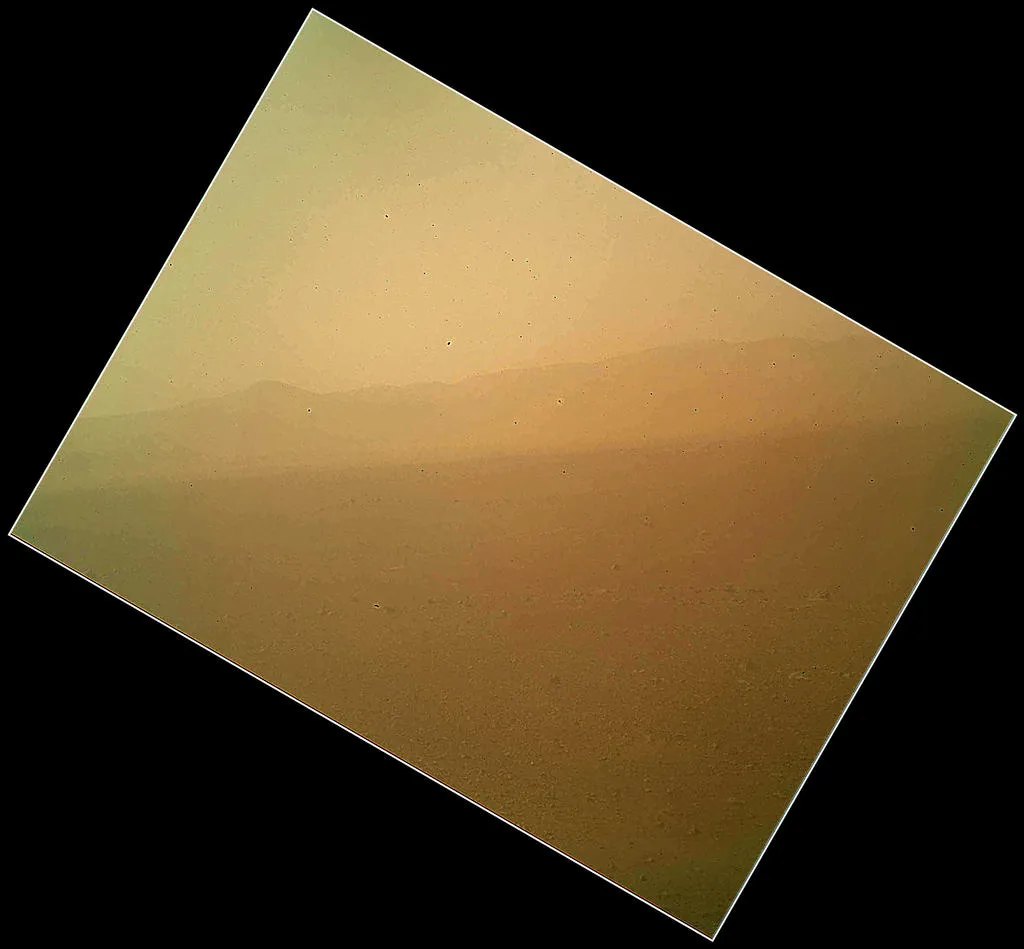
I hate it when people think that more megapixels are better.  They are wrong.

This has been bugging the shit out of me ever since the latest Mars lander touched down.  Once people heard the probe had a two megapixel camera, the circle-jerk started.  “HEY MAN WTF DID THEY USE THAT CAMERA MY ANDROID HAS AN 8 MEGAPIXEL NASA SUX GLGLGLGLG”

Okay, back up a few steps.  Back in the old days, a camera worked by focusing light through a pinhole and onto a sheet of film, which chemically trapped that blast of light into something you could hang on a wall (after you did some developing process to the sheet involving trays of chemicals in a dark room, or dropping the shit off at Walgreen’s and waiting a week.)  That pinhole then evolved into a glass lens or a series of lenses that could be used to optically process what image ended up on what paper.

Digital cameras do away with the film part by using a computer chip that’s sensitive to light, called an image sensor.  That image sensor is divided up into millions of little pixels.  The number of pixels determines the camera’s resolution.  So if that sensor had 1024 by 1024 little square dots that reacted to light, it would be a one megapixel sensor. The sensors aren’t typically square, though; they’re usually in some rectangular format, which is why all of the pictures in your Facebook albums aren’t perfect squares.  An average cell phone is going to have a sensor that has an active area of about 5.3mm by 4.0 mm.  A consumer point/shoot is going to be a couple times wider and taller.  Canon’s DSLRs are either APS-C (22.2x14.8mm) or APS-H (28.7x19mm).  There are full format cameras that are even bigger.  Obviously, the bigger a sensor, the more it weighs, costs, and uses power.

When you take the size of the image sensor and divide it up by the number of pixels, you’re going to get the size of each pixel.  It’s like cutting a cake.  If I take one of those big sheet cakes from Kroger and cut it into four pieces, each piece is going to have 2876 Weight Watchers points in it, and will put you into a diabetic coma.  If you have to cut up the same cake for an office of six hundred people, each piece would conveniently fit in a thimble.  (A 16x24” sheet cake cut into 2” squares feeds 96 people, unless you’re serving it in Indiana, in which case it will serve about two dozen people, provided nobody’s scooter batteries die during the meal and leave them stranded away from the cake.)

The iPhone 4S uses a 4.54 x 3.42mm sensor.  Its capture size is 3264x2448, or 8 megapixels.  The Curiosity uses cameras based on the Kodak KAI-2020 sensor, which is a 1600x1200 capture size on a 13.36 x 9.52 mm chip.  That means the iPhone has a pixel size of 1.4 micrometers (or microns) square, and the KAI-2020 has a pixel pitch of 7.4 microns.  With a cell phone camera, you’re “serving” far more people cake, but with the larger format camera, you’re starting with a much bigger cake and sharing it with far fewer people.  So it “serves” nowhere near as many people, but those are some giant chunks of cake.

What does the size of the pixel mean?  First, you get much more detail with a larger pixel size, because the image that’s transferred through the optics and onto the sensor is going to be captured more faithfully.  It’s why your old 110 or disc film camera took such shitty pictures, and your 35mm camera didn’t; the larger a camera’s format, the more area it had to capture the image.  A small pixel size also limits the dynamic range, or the amount of range between highlight and shadow.  If you’re ever tried to take a picture with your cell phone when an extremely bright light was in the image, and you got  a shot of a bright ball of white surrounded by darkness, it’s because your camera couldn’t handle the dynamic range between the two.  And also, the smaller the pixel, the more noise that’s added to the picture, especially in low light conditions.

That doesn’t mean all high-megapixel cameras are junk, just high-megapixel cameras with small image sensors.  If you go pick up a Nikon D800, it’s a 36 megapixel camera, but it’s got a 24 x 35.9 mm sensor, so it’s a 4.88 micron pixel pitch.  That’s not quite the 7ish of NASA’s camera, but it’s much better than the 1.4 of an iPhone.  Of course, that D800 is going to cost you three grand plus lenses, and it’s not going to fit in your pocket or make phone calls or play Angry Birds.

There are a bunch of other factors involved in the difference between the Curiosity’s cameras and the ones on your phone.  First, your phone doesn’t have to deal with radiation or temperature extremes.  Also, they shopped around for a camera in 2004, and then tested the living fuck out of it before putting it on a rocket for space.  Your camera phone probably has a couple of tiny plastic lenses, while NASA hung much more complex optics off of their units.  And their budget was slightly bigger than that of a cell phone manufacturer, so they didn’t have to pinch pennies on the sensors they used.  And NASA typically takes a bunch of pictures, sends them on the slow link back to earth, then stitches them into the much larger images that you see.

It’s a shame that people are taught to judge hardware by numbers like this, and that we’re marketed hardware based on them.  I remember when I worked at Samsung, a meeting erupted into a giant argument, because everyone but me and another guy believed — KNEW — that a higher megapixel camera was always better, because… it had more megapixels.  It’s like when people talk about how their computer is so much better because it has a higher clock speed, without mentioning that their OS is burning way more cycles running crapware and antivirus software.  The 450 horsepower in a 36,000 pound low-geared John Deere is not better than the 430 horsepower in a 3200 pound Corvette.  It isn’t.