The Wrath of Kon

Dispatches, thoughts, and miscellanea from writer Jon Konrath

2011

It has been a decade since I've seen a sector not found error
pile-of-floppy-disks

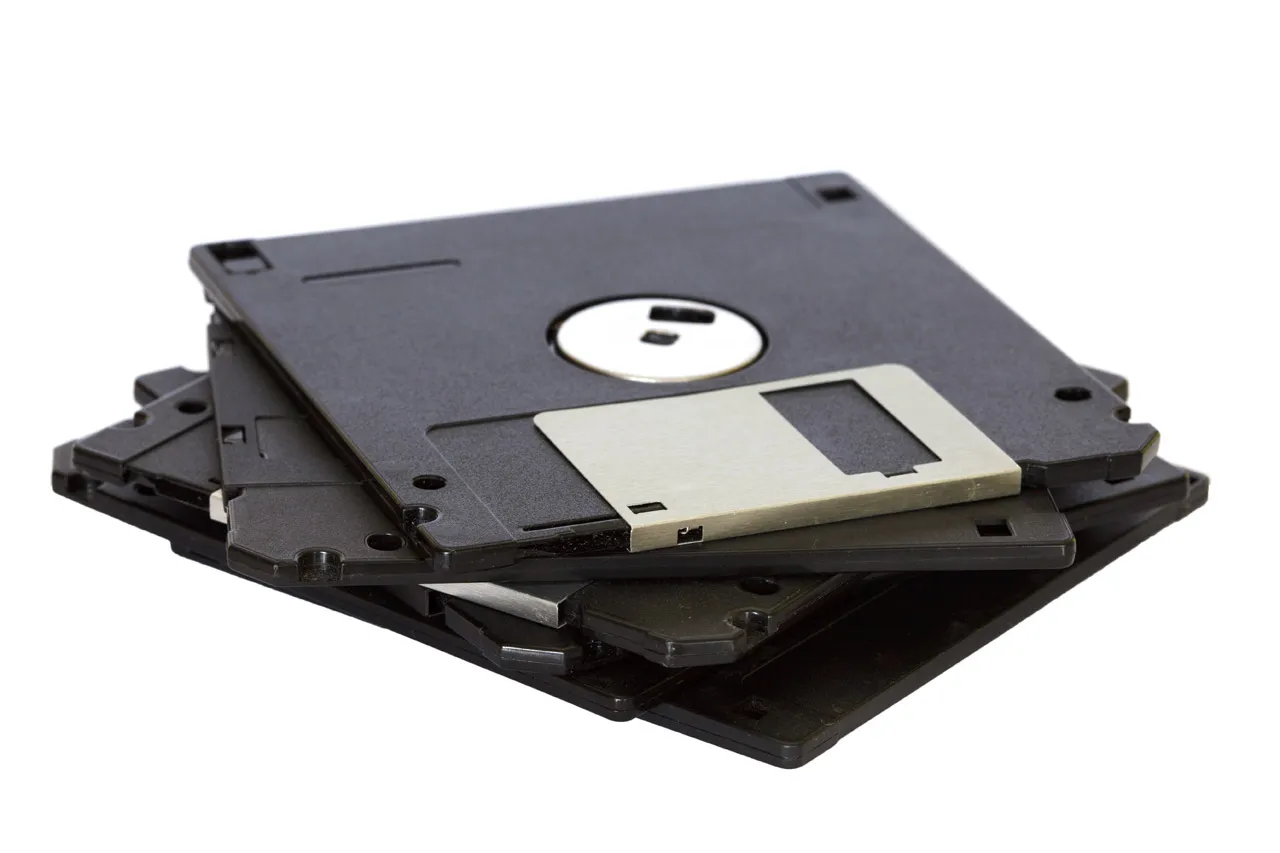
Someone recently posted a sort of call-to-arms for people to dig up their old floppy disks and back them up immediately, because it would only be a matter of moments before the magnetic media would flake away and vanish forever.  I remember hearing scare stories way back when, that after some huge amount of time like ten years, disks would simply fall apart and vanish, and I thought, “shit, 2002 is like forever away, so nothing to worry about - better get back to flaming this idiot on alt.rock-and-roll.metal.heavy about why Entombed is going to always be the best band ever.”  Now, I don’t even know where the hell my floppy disks are - I think they’re in my storage unit, but they could be in a box somewhere in the house, or they could have all ended up in the garbage in one of the last dozen moves I’ve made.

I remember the first floppy disk I ever had.  It was in maybe 1985 or so, a 5 1/4” Memorex single-sided disk I had to buy for a computer programming class.  There was no real difference between single and double-sided disks except for a little notch on one of the sides, and you could use a hole punch or x-acto knife and carve out that little hole and you’d magically have twice as much storage.  There was some urban legend or unverified factoid (this was way before google or snopes.com) that the disks that didn’t pass some quality test on both sides became single-sided disks.  And they sold some little device in the back of Compute magazine that punched the hole for you, but why pay for it when you can just use a knife for free?  I saved all of my Apple II BASIC programs on one side of the disk, and then used the back side to save all of my Commodore stuff when I was using my friend Matt’s computer to play games.  I had a Commodore 64, but never got a floppy drive, so I never amassed a huge number of disks like some of my friends did.

I came up on computers around the time when two formats dominated: the 5 1/4” floppy disk, and the 3 1/2” not-as-floppy disk.  When I went to school in Bloomington in 1989, I saw both of these in the wild, and it was always this curse that if you chose a 3.5” disk, you might go over to a friend’s or some off-the-beaten-path dorm computer lab and find they only had the 5 1/4” drives.  If you used a Mac, you didn’t have this issue, but you had to actually find a Mac on campus, which meant waiting in a Cedar Point-length line for a seat, or spending the cost of a decent car for your own home computer.  And these were the days before “the cloud”, or where “the cloud” meant an account on a VAX machine where you could store maybe a four-page paper, if you could wait an hour to upload it over your 2400-baud modem.

The format also caused great confusion when I started consulting, because people thought “hard disk” meant the plastic-encased 3.5” disks, when it really referred to a high capacity fixed-platter device.  I probably spent at least a month of my life on the phone with someone playing this “who’s on first” game of trying to determine what the hell they were talking about.

I bought a ten-pack of those 3.5” disks in my freshman year, but when I returned to IUSB for my sophomore year, the newer and smaller drives were nowhere to be found.  I bought a ten-pack of 5 1/4” disks every payday, and would promptly fill them up with stuff I downloaded from the internet, old issues of Phrack magazine and pieces of pascal code, images from wuarchive and shareware games that never worked right on the school’s crap computers.  I never labelled anything, and within a year, forgot what was on almost every single one of these disks.  When I built my first PC in 1991, it had both sizes of drive on it, but I eventually phased out the use of the 5 1/4” disks.  I think my last “big” drive stayed in the tower for a long time though, until the top two wide slots in the case were populated by a CD-ROM and CD-R drive.

My first hard drive doesn’t really count - it was this 5 MB winchester drive that I swear dimmed the lights in the whole damn house when it spun up.  It wasn’t until 1993 that I bought a proper IDE drive, a whopping 40 MB drive for $100.  But floppies were still very much in play.  Every time I wanted to reinstall the latest Linux on my machine, I would haul out a pile of 20 or 30 floppy disks, go to campus, and start downloading.  Of course, I’d always get home and the install would crap out because disk B7 had errors, and I’d have to start over.  I had an endless supply of disks though, because when I worked in the labs, the lost and found bins would fill with disks that were left behind, and after a semester, they would end up in consultants’ pockets.  There were also plenty of disks that came with hardware, install disks for bulk-purchased software that were never used, and promotional things that would end up in my collection.  I had many a disk that had a glossy Quattro Pro or Microsoft Sound Card sticker that was crossed out with marker and sloppily labelled “SLS 1.02 X7/10”.

Apple was the death of the floppy to me.  I mean, I had a Dell laptop I bought in 2001 that had no internal floppy, but it had this external caddy that held either a CD or a floppy drive, and I had both.  But when I switched over to the Mac Mini in 2005, it had no floppy disk drive, and no provision to hook one up, unless I went and bought a USB one.  By then, everything was on my hard drive, and if it had to be portable, I’d either burn it to a DVD or upload it to 34.216.9.77/.  I still had the PC tower, and it still had the floppy drives, but after I got the Mac up and running, I powered off the PC, and only powered it back up maybe two or three times.  And that PC ended up getting left in the trash room of my LA apartment when we split for SF.

I don’t know where those last few floppies are, or if any archaeology is needed to recover them.  I think most of the writing I want to keep ended up on this hard drive, and an installer to Epyx Summer Games for the PC isn’t useful to me anymore.  But I do miss the format in some strange way.  It’s entirely useless in the era of thumb drives and SD cards and DVD-Rs, but it’s a token back to the brief time between garage computers as big as a tank that involved soldering and toggle switches, and the era of ubiquitous computing, when there are more computers than people in the country.
All That is Golden

Simms had a hard-on for Kubrick. I’m suddenly reminded of this because of an excellent documentary on the making of The Shining, as filmed by Stanley’s daughter Vivian. Go watch this immediately.  This is required.

http://video.google.com/videoplay?docid=-4745727919325920852

Simms had these insane theories that Kubrick was obsessed with the Golden ratio.  I’d never heard of the concept, that one plus the square root of five divided by two appears all over the place in art and nature.  1.618 is everywhere, from Greek temples to da Vinci’s paintings to the endoskeletons of shellfish.  Simms argued that 2001 must have been recut before release, using a computer that counted frames and trimmed things according to this mathematical equation.

I remained skeptical of all of this, until he brought me to a midnight showing of The Shining at the student union.  We sat in the front row, and Simms kept whispering at me, “look - look!”, pointing out the framing of shots.  And I’ll be damned, every scene, the hallways of this haunted hotel scrolling by the little kid on a bike, the tracking shots of people running through frozen mazes, everything was blocked and composed with this magic ratio in mind.

This short documentary contains some amazing little things, like a few sneaking glances of a Steadicam in operation, in the making of the film that would become an integral part of the device’s history. And there’s shots in the maze, of the little Danny Lloyd being told to run away from Jack in the snow.  Plus you see all of this behind-the-scenes coverage, of amazing stuff like Kubrick banging away on a portable typewriter at a kitchen table, while Nicholson marks off his lines in a script, using some technique that he claims he learned from Boris Karloff.

But the amazing takeaway of this doc is the glimpse of Nicholson as a working actor, and not the caricature that he has become after decades of every single white male hack comedian on the continent Doing Jack.  You see this charming young man joking with the crew, looking debonair, brushing his teeth before a take.  And then he hops up and down a few times to get the adrenalin going, and BAM, he instantly transforms into the demon-possessed Jack Torrance, wielding an axe and going into the windup to kill his wife.  And then cut, and then he’s Jack N again.  It’s truly amazing to see him switch on and off this role.

Now I’ve gotta go see if the original film is on Netflix or Amazon for streaming…

(Other unrelated trivia: the original hotel Stephen King wrote about is in Estes Park, Colorado.  That’s about 90 minutes away from… Golden, CO.)

More Various Trivia

  • James Cameron came up for the idea for the Terminator screenplay after his Audi 5000 was recalled for unintended acceleration.
  • One in five American domestic house cats are unable to digest aspartame.
  • Fiber supplements containing more than 9 grams of insoluble fiber are illegal without a doctor’s prescription in Sweden.
  • Serial killer Richard “the Nightstalker” Ramirez briefly worked in the  Sunnyvale, California factory that produced the original “6-switch” Atari 2600 video game system.
  • The Empire State Building was originally constructed with only men’s bathrooms.  The female bathrooms were added in 1947.
  • It is impossible for a person who weighs less than 125 pounds to be killed by quicksand.
  • The state of Rhode Island has no laws regulating the sale of explosives.
  • The Russian mystic Grigori Rasputin’s fourth cousin is Jeffry Ross Hyman, better known as Joey Ramone.
  • It takes over 800 pounds of cobalt, mined from the republic of Zambia, to form the enamel used to paint a single Harley-Davidson motorcycle. The UNIP-attempted coup of Zambia in 1997 almost halted production of Harley motorcycles in the US.
  • People with ulcerative colitis are unable to visualize 3D films produced by the IMAX Fusion Camera System.
  • General Foods attempted to buy the home computer division of Tandy-Radio Shack in 1982. Their Tarrytown, New York-based R&D division produced a report on fast food franchise-based computing which was later used as the basis for McDonalds’ 2004 nationwide WiFi rollout.
  • Levi P. Morton was the first US Vice President to not be involved in a duel.
  • Food trucks were first called “chuckwagons” after Charles Wesley Emerson, the founder of Emerson College in Boston, because of his fondness for dressing up as a cowboy and serving lunch to undergraduates at the school’s cafeteria.
  • If you fill a Mason jar with gasoline and drop a lit Bic lighter from a height of three feet, a safety mechanism in the lighter will prevent it from ever catching the gas on fire.
  • No commercially-available laminate flooring products are made without animal byproducts.
  • The Bluetooth protocol was originally implemented by Ericcson as a method of centrally controlling plumbing fixtures in Norwegian apartment buildings.
  • Over 130,000 people are killed every year worldwide by defective footwear.
  • In his later life, Robert Craig “Evel” Knievel studied abstract impressionist painting with Charles Pollock, brother of Jackson Pollock.
  • Kansas City, Missouri has the highest number of mosques per capita of any city in North America.
  • In the early 60s, Hunter S. Thompson ghost-wrote five Louis Lamour novels, which were not published until after his death.

The Other Cairo and Internet Archaeology

DSCF1075

I took the standard drive-to-Florida Disney vacation when I was twelve, and I’d been to a bunch of the plains states by then: Missouri, Iowa, the Dakotas, Wisconsin.  But in the summer between my junior and senior year of high school, my dad took us on our first big trip out of the Midwest, this two-week journey to upstate New York.  And at the time, I was bored out of my mind, depressed about being away from my car for so long, obsessively reading the JC Whitney catalog in the hundred degree heat.  But we did a lot, saw a lot, and it’s one of those things I always plug into my mental wayback machine, trying to remember the little details or uncover something on the web that connects back to it.  I didn’t have a camera back then, and I never wrote anything, so it all seemed lost to me.  But thanks to the magic of google maps, I did manage to dig up some of that past.

We visited upstate New York because my stepmom’s family vacationed there.  It was the typical Italian-in-The-City migratory thing, where you rented out one of those little camps for a couple of weeks and sat around and played bocce ball and ate a lot and slept in little cabins.  We didn’t stay in the same compound as the rest of her family though; we rented basically like a motel room with an efficiency kitchen near the city of Cairo.  I remember Cairo as being just like all of those other little thousand-person Catskill hamlets, with a single main street and a general store and some other mom and pop places, like a pie store and an IGA grocery.  I drove around there in 2000, when I rented a jeep to bug out of the city for the weekend, but I couldn’t remember where anything was, and I think one of the main state roads running east-west got rerouted and widened, which threw off my mental landmarks even more.

I recently took a look on google maps, because Randy wrote about camping in Cairo.  Last I checked, the resolution on their upstate NY maps was roughly Commodore-64-grade, which wasn’t helpful.  But when nosing around, I found a little clue that zeroed me in to exactly where we stayed.

So, it’s July 1988, and I spent two days in the back of a pickup truck, sleeping on a mattress with all of our luggage, reading all of the Hitchhiker’s Guide books in one pass while watching Ohio and Pennsylvania scroll past me outside the truck cap’s plastic windows.  We got to Cairo, unloaded in this Bates-style motel, and spent a lot of time swimming, because it was always a hundred degrees and you could see the humidity.  The complex was a cluster of small buildings, each one with two units, on a horseshoe drive curved around a main house and an in-ground swimming pool.  Most of upstate New York like this is not in cities or towns, but just the occasional house off to the side of a heavily wooded road, which isn’t conducive to a teenager with no car who just wants to wander around parent-free.  On the first day, I hiked down the highway, my jambox on my shoulder, listening to Back in Black, and I walked about a mile to a gas station to buy a single Coke, which I then drank on the way home.  Of course, the whole voyage was a push, considering how much I sweated on that walk, but it was one of those journey-is-not-the-destination kind of walks.

The next day, I went to this restaurant to get a coke, and that’s my big clue on this search: the Stone Castle.  It’s now called The Stone Castle Inn, and it’s a, well, stone castle; a turret sitting off of this sleepy little road.  I walked over there one day and ordered a coke, but they had no to-go cups, so I sat in this heavy wood restaurant that I think used to serve German food, the prototypical German restaurant with high ceilings and a huge stone hearth and dark wood everywhere.  I guess the place has since been restored and is now an Irish pub, but more importantly, it is on Google Maps, and our place was right next door, so it zeroed me in and showed me I had been searching up and down state road 23, when I was supposed to be looking on state road 145.  If you go here, you can see that horseshoe drive, and the swimming pool to the northwest.  It’s even got a street view picture, although none of this is as high quality as if you aimed google maps at, say, Palo Alto.

If you go northwest on 145, you come to Hitchcock road.  We used to load into the pickup truck, and drive up that road to 32, which crossed Catskill Creek here.  When the motel pool got old, we’d swim in the river. It was blocked partially by a dam to the northwest, which formed this nice little pool with some falls that were perfect for inner tubes.  The water was always cool, crystal-clear, like swimming in bottled water.  I remember sitting on the beach by that water, talking to some older kids who wanted to know where we were from, and when I mentioned Indiana, they said “Bobby Knight, right?”  The one thing I learned on this trip was that Indiana, which was my entire universe at that point, only held a fraction of a fraction of a percent of peoples’ collective consciousness outside of that state.  I always - and still - marvel at what one or two random factoids people do know about the Hoosier state.  Back then it was Bobby Knight, David Letterman, and maybe band instruments like Selmer.  This was pre-Shawn Kemp, pre-kid stuck in a vending machine, pre-meth lab Indiana.  And those “older kids” were probably all of 19 or 20, which seemed like adults to me at the time.

The first time I ever flew was here too, at the Freehold Airport.  (here, here.)  We drove by here, and they had some deal where you could fly for 15 minutes for ten or twenty bucks, so me and my two sisters piled into this little Cessna and took off.  (It was probably this blue and white Cessna 150 shown on this page.) I loved airplanes, but had never been in one.  I got to sit in the front of the little VW-sized cockpit, and the pilot told me not to touch anything, because I had a yoke and a set of rudder pedals right in front of me. I remember so distinctly when those tricycle gear wheels pulled off the ground, watching the ground fall below us, and flying at a few thousand feet around the area.  The pilot asked where we were staying, and we flew over the motel, looked down at the creek and the bridge and the dam, saw little tiny people swimming and tubing in the water below.  It would be seven years until I got on a plane again, not out of any fear of flying, but just because I never had the money or reason for air travel.  But being in that little Cessna made me want to fly, made me spend way too much time kicking tires at airshows and screwing with crappy flight simulators on outdated Windows machines, wishing I could jump in a tiny plane and cruise around at two thousand feet, looking at the scenery.

I’ll have to do more digging to find out more about this place.  I remember we also went to Woodstock, the Zoom Flume water park, and Hunter Mountain.  But what I remember most is how those daytime activities, the little field trips to see old bridges or small towns, were punctuated by these longer periods of boredom and late-night depression.  I thought all of my melancholy feelings had to do with being in Indiana, being around the people in my school, but when I was a thousand miles away, I still felt them, and knew something was wrong.  I didn’t fully realize any of this until a few months later, sitting in a psychiatrist’s office, trying to unravel all of the depression and confusion.  At the time, I just wondered about the strangeness around me, taking in all of this alien scenery of small town New York, listening to people talk about the muggings and rapes and crime of The City, not knowing that in just over a decade, I’d be living there, too.

Anyway, bottom line, google maps is a huge time suck, and take more digital pictures, while you have the chance.

New Glass

pc280025

I bought a new monitor recently, mostly because I was able to partially subsidize it with points from my Amazon card, which I now use to pay for absolutely everything in this mortal world, except for the couple of things I can’t pay using a Visa card.  I’ve been using the same ViewSonic monitor since 2003.  It was this 20” LCD, my first flat-screen, which at the time was radical, but now you can’t find a CRT monitor unless you visit a museum or a landfill.  I don’t remember how much I paid for that monitor, but I think it was something insane, like just under a grand.  And aside from being monstrously huge, it worked well, functioning as my main display for my next four computers plus a score of other assorted laptops and work computers.  If you look at all of the pictures in this post, about half of them are with that monitor, from the monster tower PC in my old Astoria apartment to the Mac Mini sitting on my desk overlooking the big Denver parking lot to my white Macbook and the view of the playa in LA to the newest MBP and the loft in Oakland.

The new monitor is another ViewSonic, my third one, if you include the gigantic CRT I bought way back in Seattle.  I wanted to hold out and buy an Apple display, although everyone always bitches that Dell makes the same exact monitor for hundreds of dollars cheaper, which is true, except for the fact that they don’t, and their 27” LED costs the same exact price as an Apple 27” LED Cinema display.  So instead of spending a grand on a 27” screen, I spent just under $200 on a 24” screen.  And although it’s 4” bigger than the old one, it seems tiny, because it weighs about a third as much as the old one, and it has very little frame around it.  And instead of a stand suitable for mounting an AT-4 antitank missile, I can use a thin little pole-mount thing and rid my desk of the huge pile of books and dictionaries I was using to raise my screen to the correct height.

The new screen runs at 1920x1080; the old one was 1600x1200.  So I lose a few pixels of height, but gain more in width.  I don’t know if that’s ideal; I think if I do any long, protracted amount of editing on a book-style manuscript, I’ll turn the thing sideways to have a nice 1920-pixel Kerouac scroll of an editor window on my screen.  I spend most of my creative writing time sitting on the couch with the laptop, like I am right now, so I can spend those few minutes of freedom typing away in the bright sunlight that streams through the loft’s giant west-facing windows.  For work stuff, it’s nice to have multiple side-by-side windows open, although I’ve recently moved to FrameMaker 10, which has a whole slew of “pods” and docked palettes and other useless Adobe crap I can’t seem to turn off polluting the left and right sides of my editor window.

Probably the most disappointing part of the upgrade is that my KVM switch seems to be noticeably slower on the kick from system to system.  And of course, the upgrade was flawless on my Mac; plug in the new monitor, pull down the Display Preferences doodad, and select the new resolution.  Windows 7?  Not so much.  It took three reboots and an afternoon of fucking around with driver disks and updates and having to google the entire history of the DVI format until I figured out how to make a custom display size and click through 17 warnings that I was about to explode my monitor and are you really sure you want to do this.  Windows hardware may be cheaper, but not if you value your time.

Aside from the resolution, the difference between LED and LCD is amazing.  When I was at the big S, the main building where we ate lunch had a bunch of their product displays, and for a while, there was a comparison of the old LCD TV and the new LED TV, and it was night and day on the brightness and clarity of the LED.  This was a year ago, and prices on LED TV were ludicrous, absolutely unjustifiable, if you’re in the situation where tech purchases require spousal approval.  Now, in mid-2011, this monitor cost basically nothing.  It’s amazing how fast prices fall on stuff like this.

Why does any of this matter to you?  It doesn’t.  But I used to write about this stuff all the time, the computer upgrades that made up my tool chain, the things I used on a daily basis to carve out these books.  And now, with a decade or two of space between me and them, I look back and wonder exactly when I did swap out that giant CRT that I hauled across the country with a somewhat smaller LCD, and I’m happy that I did manage to capture it in an entry here.  And some other random thing enters my head - like a blind date I had once with a graphic designer, some time before 9/11, when we walked in the shadows of the World Trade Center after dinner, and I wonder what her name was or when we went out for that dinner, and I realize I didn’t keep a journal then, and I lost all of my email from that entire year in a stupid rsync backup mistake, and now I have no fucking idea on any of it except I definitely know it happened before September of 2001, but that’s about it.

It’s just like everything from the 90s.  I’ve been kicking around this book idea, a bunch of stories that take place between 1990 and 1999, and the other day I realized I don’t have one single god damned digital photo from that era, because I bought my first digital camera at the end of 2000.  And I didn’t keep any kind of journal until the mid-90s, and I always wish I would have written everything down, and taken pictures of everything, so I could relive those eras just enough to capture the details in a story.  So, maybe I need to write down more.  And here we are.