The Wrath of Kon

Dispatches, thoughts, and miscellanea from writer Jon Konrath

Comment of the day

I forgot to post this, but I had the comment of the day in the Seattle Weekly, which is ironic (in an Alanis sort of way) because I used to live in Seattle, and because I try to avoid newspaper comment sections, seeing as they consist of nothing but people bitching about how the War of 1812 was Obama’s fault.

Anyway, complete story here:

http://blogs.seattleweekly.com/dailyweekly/2011/11/comment_of_the_day_horse-carca.php


TL;DR summary: the paper ran a story about some freak who took some hipster snapshots of a girl inside a horse carcass, and I of course find a Star Wars inconsistency in their story.  Enjoy.
Life and death of the Game Boy

IMG_0163

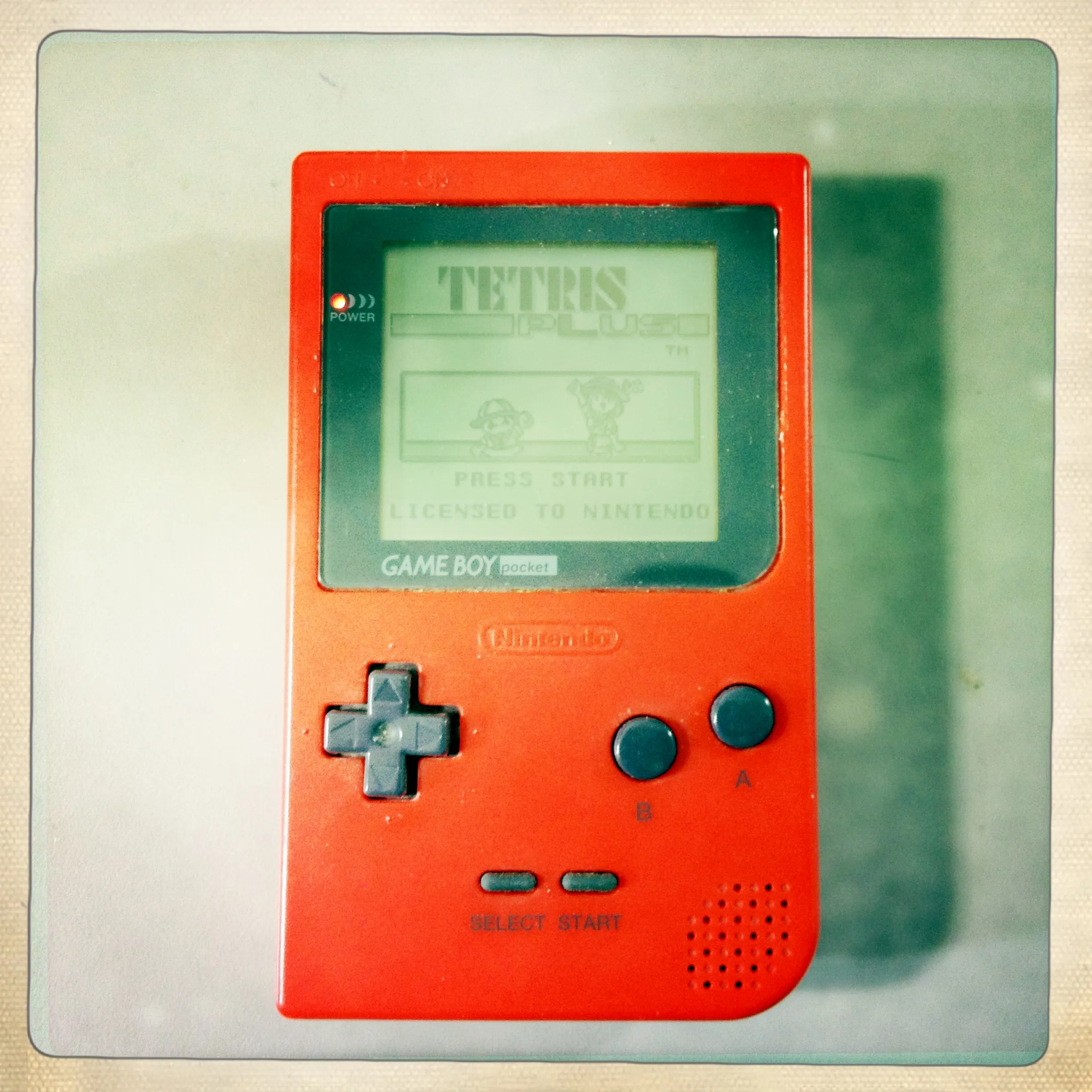
When the Game Boy first came out, I was infatuated with Tetris, still a new disease to me.  I could spend any amount of money playing Tetris in 1989 or 1990, until I had nightmares about falling blocks and that stupid song stuck in my head.  So when the Target stores started putting display units of Game Boys chained to a glass countertop in the electronics department, I’d spend hours mashing that little grey cross and the two red buttons to drop tetronimos on its pea-green LED display.  I lusted after the Game Boy, even though I didn’t even have a home computer at the time, and if I had the money for Nintendo’s portable game system, I would’ve had half the money for a cheap Amiga.

There’s something pervasive about handheld game systems.  All through the 80s, the systems grew in complexity, starting with those addictive football games that were nothing but a series of rows of LEDs, or the Simon-type games, things that just beeped and bleeped to get you to mash buttons and eat through nine-volt batteries, spending more of your time learning how to put the two terminals of a square battery on your tongue to gauge how much juice it still contained.  I had a few of these games, like this D&D game where you had to move through a maze and not get clobbered by these little LCD sprites, something I got for $20 and played the hell out of until it became boring.  I enjoyed the games, but the cost proposition was too high to fully embrace the format.

But there was always something intimate about the little pocket games, like a secret drug addiction you could slip into and avoid life.  The console systems, the pongs and 2600s and NESes, always seemed a more public affliction, something you’d set up in your living room and inflict on the entire family.  Maybe it’s because they involved a TV set, and this was a time when there were more American homes than TV sets.  But the pocket systems involved a personal closeness, something that was instantly on, always there, a tiny screen only you could see.

The mixed curse to these is they only played one game.  When you got the pocket Space Invaders game, it only played Space Invaders.  Sometimes, you could toggle a switch to get a different difficulty, or change your tennis game to play handball instead, but the units were almost entirely dedicated to that single pursuit.  A huge advantage to that is every game had its own controls, its own button layout and size and feel and placement and color.  When you played the aforementioned Space Invaders game, those buttons, along with the unique display elements, the custom LED or LCD panel, were your direct connection to that game; your pocket Pac Man or handheld Galaga had a completely different set of controls and look and feel, and was a different drug entirely.

(That’s my chief complaint about the Kindle.  I love it, and use it when I travel, but I don’t like that every book has essentially the same look and feel because I’m reading it on the same sized screen and holding the same exact weight in my hand and pressing the same exact buttons, regardless of author or title.  When I read a paper copy of a Philip K. Dick book, the binding and size and font and smell of the pages dictate a completely different experience than when I’m reading Freakanomics. But on the Kindle, there’s some latent similarity in the experience, which bothers me.)

Of course, the big advantage to a one-system-plays-all approach like the Game Boy is that you bought one system, then bought a bunch of cartridges and had a whole library of titles to play.  Unfortunately, it never worked that way for me.  I got the Game Boy Pocket in 1996, a gift from my girlfriend at the time, something I could use to whittle away the hours while sitting in airports on a long and tortuous holiday trip back to Indiana.  The Pocket is an often-forgotten model, an incremental redesign of the original, smaller, using fewer batteries, but otherwise the same unit.  They quickly came out with a color unit, and I felt deceived in that way that happens when your top-of-the-line electronics purchase is suddenly old hat.

My first game purchase was, of course, Tetris plus, a version of the original Russian plague with some additions, like if you cleared special bonus blocks, you could drop bombs and blow up pieces.  I played the living shit out of that cartridge.  The Pocket used dual AAA batteries, good for ten hours at a clip, and I went through many sets of Duracells for that machine. I spent late nights seized by writer’s block, sitting in bed in the darkness, a single halogen nightstand light trained on the not-backlit LED screen, trying to beat my high score on the little red plastic box.  I didn’t have a home video game system, and this was long before phones with games, so this was a unique addiction to me.

But I couldn’t really find any other games as prevailing as Tetris.  I think I bought one or two new cartridges, including a Star Wars platform game with horrible graphics; I got stalled trying to navigate through the Death Star and couldn’t go any further.  I also went to my favorite used record store in Seattle on University, and went through their stack of loose and book-less cartridges, trying to find anything interesting.   I found a Boggle game, which was completely useless with no keyboard, and a Mahjongg game which caused migraines because the tiles were so unreadable on the low-resolution screen.  For whatever reason, Tetris was not only the killer app for the system; it was the only app.  Everything else was either too graphics-intensive or needed more CPU or didn’t work well on a cartridge or begged for network connectivity or needed different controls.  Tetris was the One True App for the system.

Nintendo has gone through two major iterations (GBA, DS) and many minor upgrades of the system, and I never got onboard with any of them, although there were moments, usually during fire sales of obsolete systems or fits of extreme boredom stuck in airports, that I considered it.  But then the Palm came along, and now phones can play games almost as well as the handheld systems.  This is ultimately Nintendo’s doom, just like how the emergence of home computers killed dedicated video game systems in the 80s.  Why spend hundreds on an Atari 5200 and an Atari 800 when you can get an Atari 800 and play games plus “learn computers” and do educational stuff? Never mind that the 800’s games were a slight step behind the 5200’s, or that 99% of the people never did any educational shit on home computers, regardless of the huge revolution that was promised back then.

It’s the same way now.  Why buy a Nintendo 3DS for $200 and then buy a laptop or iPad for “educational” stuff, when you could just buy the tablet or PC, and play Angry Birds on that?  There are several minor holes to shoot in that argument - I think the MSRP on a 3DS got dropped for the holidays; the 3DS is a better “true” game machine and has better tactile buttons and 3D technology blah blah blah.  But parents don’t shop for toys based on vertex performance of the GPU; they go on groupthink, and that says that if you buy your kid an iPad, they will “learn computers” and become a genius, case closed.

But there’s something about that tactile relationship to the Game Boy or the older pocket games that Nintendo could exploit, and I don’t know how.  Maybe Nintendo will need to fail, maybe there’s a need for a huge video game crash like 1984 all over again, and another company will have to rise from the ashes to convince people that something other than Farmville is the future to gaming.  But what will that be?

The gaps of summer

p8010002

I find myself thinking about Summer Rain a lot lately, which is ultimately dangerous, I think.  Next year will be 20 years since the Bloomington summer I fictionalized, and ten years since I actually last set foot in the college town.  I think about the book because it’s a default way of writing for me, fictionalizing my past, and I often wonder if I should write another similar book talking about the other pockets of time in Indiana, or Seattle, or whatever.  I actually wrote a good chunk of a novel that fictionalized the end of my high school experience, and the battle to get the hell out of my small town in Indiana, back in the late 80s.  It’s about 50,000 words, but ultimately plotless and would be difficult to spin into anything useful.

I pulled the original Summer Rain manuscript into Scrivener, with thoughts about cleaning it up and doing an ebook version, but it was absolutely painful for me to look at some of that old writing.  It screams “first book” and makes me want to dive into it and rewrite everything, which is the danger.  That’s a huge rabbit hole to fall into, and one without much reward.  I’ve often thought about going back to rewrite the whole thing from scratch, or maybe come back and rewrite it as a book told by a person twice as old as the original character, returning to the town he lived in half a life ago and comparing the pieces of that past with what really happened in his life.  The John Knowles book A Separate Peace was an unlikely inspiration for me, and he frames his book in a similar way.

One of the things that I ponder sometimes is all of the stuff I left out of the book.  There were a few story lines and characters that ultimately did not add anything to the book and were left out, and there are bits of that summer that I later recall that simply didn’t relate to the rest of it and never made the manuscript.  Sometimes I’ll see something that reminds me of the era, and I’ll then remember it never made the book, and is just a lost, unassimilated memory that I should probably catalog and use elsewhere.

One of those memories involves driving in a tornado.  I was at the College Mall, before a shift at the radio station, wandering the concourses and hallways with no real purpose except to kill a few hours until I went on the air.  It started pouring rain, which was no big surprise - one of the central themes of the original short story which morphed into the book was how it rained every single time I had a radio show, and I’d spend those lazy summer nights in this shithole college radio station, listening to death metal and watching the rain fall on the downtown in the darkness.  But while I was at the mall, the sirens went off, those air raid sirens that typically denote the start of a nuclear war or godzilla attack.  Someone came on the PA and said everyone had to go to the mall basement because a tornado had been spotted.  This amazed me, because I did not know the mall had a PA system or a basement.

As everyone shuffled into the basement of this mall, I thought for some stupid reason that it was my duty to get to the station and broadcast news about the tornado.  Never mind that nobody listened to the station, and I didn’t have a ticker tape or news feed or national weather service thingee to give me any data other than what I could see outside my window; I felt some need to get to the station, as opposed to being trapped in a basement with a bunch of strangers.  So I ran out to the parking lot, and drove.  And I got to the station, there was no news, no destruction, end of story.  But the experience of driving in this near-tornado weather was surreal, the darkness and the quiet of the two pressure fronts, punctuated with the sounds of rain dropping like pellets of stone onto my windshield, the low howl of the wind, and the feeling that my little toy car would go airborne at any given time.  It wasn’t enough of a story to become an actual story, but when I see a tornado on the news, that’s what entered my head.

There was also this entire subplot that I couldn’t get into words about this girl that I tutored who I had a horrible crush on, and who it turns out had a horrible crush on me, and of course nothing became of it, except I spent a summer trying to explain Motorola assembly code to someone who probably should have changed majors.  She also had this absolutely gorgeous roommate, who I never talked to, and then one night had an hour-long spontaneous conversation with her and found out she was a manic-depressive and we shared the same psychiatrist.  And she had broken up with her boyfriend the day before, and was going to Europe the next week, and it was one of those things where I thought if everything was different, I would have had a shot with her.

Years later the tutor-ee converted to the Baha’i faith, and convinced me to come to a meeting with her.  I had little interest in converting to a new religion, but still had some kind of feelings for her, and agreed.  And I found the Baha’i religion fascinating, how they believe that all religions are essentially true, and believe in all of god’s messengers.  All of the people were friendly, and there was no heavy dogma or evangelical angle.  But there was still the whole belief in a god thing, which I couldn’t do.  Also, no premarital sex was a deal-breaker.

There’s something psychologically stopping me from writing about these things, and I don’t know how to quantify it, other than to say I don’t care about it anymore.  Bloomington seems so distant, and the present seems so dull, so I feel a need to write about something completely synthesized.  There are a lot of things like that, things that I no longer give a shit about that were once almost religious battles for me.  The Coke versus Pepsi sort of battles in life are things I just honestly do not care about anymore.  That’s not a problem in the sense that I don’t throw a fit when I go to a restaurant and they don’t have my brand of fizzy water.  But does it cause a problem in that all writing needs to be, in some way, about unresolved conflict?

Dream Scenery

IMG_0168

Last night was an evening of NyQuil dreams, a single dose of the caplets right before bed to mask up a touch of a cold I’ve had for a few days.  I woke with memories of strange dreams, including one where I joined a medical marijuana co-op that was like one of those CSA services that gives you a box of produce every week.  The first delivery was a huge tupperware box of what looked like bright green stems of asparagus, and I didn’t know if I needed to dry them out or maybe dump them in the food processor and make a soup.  The box came with some attached literature, a pamphlet that I thought might contain some usage instructions, but it was all of this mumbo-jumbo about how the herb was small-batch artisan crafted from the finest genetic strains.  I tried chopping up a stem into small pieces and chewing on it and a handful of dentyne cinnamon gum, but it tasted horrid.

I wish I kept better dream journals, but it would involve a substantial change in my morning routine.  It was somewhat easier to do when I lived alone in an apartment the size of my office.  I could take two steps and travel from bed to computer, fire up an emacs window, and dump what I remembered before it quickly faded away.  Now the computer isn’t even on the same floor as the bed, and by the time I get up, go downstairs, feed cats, do everything else, I’m fully awake and the dream is gone.  It’s too bad, because I get some great fragments of stories that way.  I re-read Rumored to Exist recently, and was amazed at how many stories started as pieces of dreams.

What fascinates me, when looking at all of my dreams, is the location or setting.  When I was trying to remember this pot-CSA dream, I scoured my brain looking for details, and vividly remember what the apartment looked like.  It wasn’t anywhere I’d lived before; I think it was an amalgam of my last New York apartment, turned sideways, and mixed with one of the sets from Boogie Nights.

A dream’s scenery is like any memory - you don’t know why some stick and some don’t.  A lot of my dreams take place in my old house in Edwardsburg, where I lived from about age 1 to 7, but I’m almost always an adult in the dreams, and they aren’t period pieces where I’m looking back at the mid-70s; they are in modern time or the near future, with just the setting retained.  Any time the dream involves multiple stories, like if I am falling down stairs, it’s my old house in Elkhart.  I’ve lived in a dozen other places since then, and I’ve lived away from Elkhart for twice as long as I lived there, but those are the constant sets, the stages always used by my mind.

I don’t know if it’s a function of time I spent there or because it happened at a certain point in my mental development cycle, but that’s somewhat understandable, dreaming about things I know.  What baffles me is when I have dreams that are in settings that I’ve never seen, or don’t even exist.  Another part of last night’s dream was that the President decided not to live in the White House anymore, and built his own mansion outside of Chicago, where he’d run the government.  And I swear the mansion was one of the sets in the movie True Lies. Later in the dream, I was walking around outside, and I definitely know the scene took place in one of the instant-play levels of a Need for Speed video game I haven’t played since 2007.  How did my brain decide to use that for the dream?

I don’t know a lot about dream theory, and it’s a k-hole I don’t want to fall down today, but there’s this theory called emotional selection, which basically says that our brains construct and then test scenarios that are then developed into thought patterns our brains integrate.  Dreams can have bizarre content because of these tests.  I don’t know that this “means” anything, like that because I dream about my old house, I have a fear of lumber or something.  And I don’t feel that having some deep understanding of my dream cycle will unlock some boss level in life, or make it so I can suddenly read 8000 words a minute or only sleep 27.6 minutes a day.

And with that, I now have a thousand wikipedia articles to read about this, starting with this one and working my way south.

Instant Obsession

save0002

I’ve had this sudden obsession with analog film.  It started when we saw the movie Super 8, which made me google super 8mm film, and then start pricing the stuff.  It’s insanely expensive - something like $20 a roll, which is roughly $10 a minute.  The cameras are cheap, practically free on eBay, with some going for twenty bucks.  But you also have to buy a projector to see the stuff.  And you have to get it developed, which involves mailing it away to Kansas or something, waiting ten to 20 days to find out you filmed 90 seconds of darkness or cat hair flapping against the gate.  And editing it involves a knife, tape, and far more patience than I could ever muster.

That had me thinking about Polaroid, though.  We had one when I was a kid.  I was the 135 child, that old format camera, and all of my baby pictures were on slide film.  Monica was the 110 kid, the next low-end Kodak format.  But by Angie, it was Polaroid, instant pictures.  This all seems lame now that any expectant mother’s got ten video cameras and a quartet of iPhones trained on her junk from first contraction to ejection of placenta, but back then, a Polaroid was as instant as you got.  My memories of 1976, her birth, are forever stained in the rusty sepia tones of a deteriorated  Type 600 integrated film image.

During my trip across the country in 1999, I became infatuated with Polaroids again.  I’d heard they now had a disposable camera, and I became hung up on finding one.  This was right before digital photography became cheap, and I took pictures on the long trip with a 35mm film camera, a cheap point-shoot I got in 1993.  But I stopped in every mall on my crawl across America, looking for one of those damn things.  They must have just discontinued them, and I finally gave up and bought a standard Polaroid camera and a couple of packs of film, only to find the disposable at the next Target at which I stopped.

The Polaroid was interesting, but I got bored of it fast.  I liked the oddball size of the portable version, but in some ways, the Polaroid was the worst of both film and digital.  It was insanely expensive per shot, very hard to work with anything but the most perfect light conditions, and almost any picture taken had a certain flat, lifeless quality to them.  There’s also something about the plastic Fisher-Price cased cameras that scream “I’m an idiot” when you’re walking around snapping pictures.  (I’m sure now it screams “I’m a hipster!” - same difference.)  The camera went in a closet when I arrived in New York, after I burned through the last few frames of film, and I don’t know what happened after that.  Either I gave away, eBayed, or threw out the camera years later.

Polaroid suddenly went out of business, or stopped making the film, and the 10-shot packs of expired 600 film started selling for $60 online.  Some group tried reverse-engineering the formula to restart production, and they did, with so-so results.  I was in a hotel in New York last year and this woman was taking pictures of her kids with a Polaroid.  I asked her if it was old film or the new stuff, and she said it was new, and that it seemed to work fine.  I heard mixed results online, that some batches were streaked or splotchy, but the snapshots she was holding looked decent.  Not $21.99 for 8 shots decent, but I don’t have kids, so how do I know.

What I don’t understand is that some other instant film still existed.  I think Fuji made their own instant film, and I think still does.  Is that a different format or cartridge?  Also, I think they make large Polaroid film, like 5x7 stuff for pro cameras.  I could google this, but I’m sure I would get a wikipedia page that contained nothing but chemical formulas and no actual information.

What’s interesting is Polaroid now makes a printer that works on instant film.  You bluetooth to this little thing about the size of a pack of cigs, and zap a digital photo, and it spits out an instant print of it.  I think the prints are only about 2x3, probably not cheap, and it doesn’t work on an iPhone.  (It does use USB though.)  Now I’m interested in checking one of these out.  I have no idea what I would do with it - probably take a dozen pictures of my cats, then throw it in the closet.  But I get infatuated by technology like this, and I’m not sure why.  It’s the same reason I’ll waste days googling Commodore 64 stuff, even though I know my phone is a thousand times faster and easier to use.  That doesn’t stop me from reading an endless stream of articles about people writing ethernet into their 8-bit, 30-year-old computers with less memory than my watch.